
106) A sum of money at certain rate of interest when compounded annually becomes ₹625 in 3 years and ₹675 in 4 years. What is the rate of Interest per annum?
A) 8%
B) 4%
C) 7%
D) 6%
Explanation:We are given:
* Amount after 3 years = ₹625
* Amount after 4 years = ₹675
The interest for the 4th year alone = ₹675 – ₹625 = ₹50
This is because compound interest adds interest on interest, so the 4th year’s interest is calculated on the amount at the end of 3rd year (₹625).
Step 1: Use formula for Compound Interest:
Let the rate be  per annum.
We know:

So:


—
✅ Final Answer: 1. 8%
107) How many technology innovation platforms have been launched by the Central Government for development of technologies for globally competitive manufacturing in India in July 2021?
A) Six
B) Five
C) Eight
D) Seven
108) If 32% of 22.5 ![-\frac23\times\sqrt[3]{512}\times\sqrt{81}](https://www.mcqbits.com/wp-content/ql-cache/quicklatex.com-a3e2dea461d400a1abe73f2428f44fcd_l3.png "Rendered by QuickLaTeX.com") =y,then the value of y is:
=y,then the value of y is:
A) -40.2
B) -41.2
C) -40.8
D) -41.8
Explanation:We are given:
![32\% \text{ of } 22.5 - \frac{2}{3} × \sqrt[3]{512} × \sqrt{81} = y](https://www.mcqbits.com/wp-content/ql-cache/quicklatex.com-743e4b5c6b7918d9905cecad3c82ba5e_l3.png "Rendered by QuickLaTeX.com")
Step 1: Calculate each part
(i) 

(ii) ![\sqrt[3]{512}](https://www.mcqbits.com/wp-content/ql-cache/quicklatex.com-6441790c28fd403d0d30c2f175219ccd_l3.png "Rendered by QuickLaTeX.com")
![\sqrt[3]{512} = 8 \quad (\text{since } 8^3 = 512)](https://www.mcqbits.com/wp-content/ql-cache/quicklatex.com-7b84510209ea43756b70aed7ac70d360_l3.png "Rendered by QuickLaTeX.com")
(iii) 

Now compute:

Step 2: Plug values into original expression:
7.2 – 48 = -40.8
—
✅ Final Answer: 3. -40.8
109) Evaluate 
A) 
B) 
C) 
D) 
Explanation:We are asked to evaluate:

—
Step 1: Simplify the Numerator
Use the identity:

Alternatively, for specific symmetric cases like this:

Use the identity:

So,


Add them:

—
Step 2: Simplify the Denominator

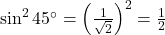

Now compute the denominator:

—
Step 3: Final Evaluation

—
✅ Final Answer: 1. 
110) It was Thursday on February 1, 2007. What was the day of the week on February 2, 2006?
A) Saturday
B) Thursday
C) Friday
D) Wednesday