
26) If 3x + 2y = 13 and y2-4y+ 4 = 13 and y2-4y+ 4 = 0, then find (x,y)
A) (4,2)
B) (5,-1)
C) (2,3)
D) (3,2)
Explanation:We are given two equations:
1.
2.
We need to find the values of ( x ) and ( y ).
Step 1: Solve the second equation for ( y )
We are given:

This is a quadratic equation. We can solve it using factoring:

Thus, we get:

Step 2: Substitute ( y = 2 ) into the first equation
Now that we know ( y = 2 ), substitute this value into the first equation:
3x + 2(2) = 13
3x + 4 = 13
3x = 13 – 4 = 9
x =  = 3
= 3
Step 3: Conclusion
We have found ( x = 3 ) and ( y = 2 ).
Thus, the correct pair is:
(x, y) = (3, 2)
27) Eight persons P, Q, R, S, T, U, V and W are sitting around a square table for dinner in such a way that 4 persons are sitting at the four corners and 4 persons are sitting at the mid-positions on the four sides. All of them are facing the centre of the square. S sits to the immediate left of U. U sits to the immediate left of T. T sits at one of the mid-positions of the sides. R sits third to the right of U. P is an immediate neighbour of both V and R. W is not an immediate neighbour of T.Who among the following is sitting at one of the corners?
A) V
B) R
C) Q
D) S
28) A certain sum on compound interest becomes ₹56,180 when compounded annually after 2 years and ₹59,550.80 after 3 years. Find the sum (in₹).
A) 48,700
B) 50,000
C) 52,500
D) 45,000
Explanation:We are given that a sum of money grows with compound interest and the values for 2 years and 3 years are provided:
– After 2 years: ₹56,180
– After 3 years: ₹59,550.80
Let’s use the formula for compound interest to solve this:
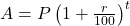
Where:
– (A) is the amount after (t) years
– (P) is the principal (initial sum)
– (r) is the annual interest rate (in percentage)
– (t) is the time in years
Step 1: Understanding the relationship
– After 2 years, the amount is ₹56,180.
– After 3 years, the amount is ₹59,550.80.
The amount after 3 years is the amount after 2 years (₹56,180) increased by one more year’s interest. Therefore, the difference between the amounts after 3 years and after 2 years represents the interest for the third year.

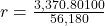
So, the interest earned in the third year is ₹3,370.80.
Step 2: Determine the principal (P)
We know that after 2 years, the amount is ₹56,180. This amount is the sum of the principal plus compound interest for 2 years. The interest for the third year (₹3,370.80) is based on the amount after 2 years, so:


Solving for (r):

Step 3: Calculate the principal (P)
Now, use the formula for compound interest for 2 years to calculate the principal:



Solving for (P):

Conclusion:
The principal sum is ₹50,000.
29) A right circular cone is surmounted on a hemisphere. Base radius of the cone is equal to radius of the hemisphere. The diameter of the hemisphere is 12 cm while the height of the cone is 8 cm. Find the cost of painting the compound object if it costs ₹25 to paint л cm2.
A) ₹10,371
B) ₹3,300
C) ₹26,930
D) ₹4,500
Explanation:Let’s break down the problem step by step to find the total surface area of the compound object (which consists of a hemisphere and a cone) and then calculate the cost of painting.
Given:
– Diameter of the hemisphere = 12 cm, so the radius of the hemisphere 
– Height of the cone ( h = 8 cm )
– Radius of the cone’s base (same as the radius of the hemisphere) ( r = 6 cm )
– The cost of painting = ₹25 per 
Step 1: Calculate the surface area of the hemisphere.
The formula for the surface area of a hemisphere is given by:

Substitute ( r = 6 ):

Step 2: Calculate the surface area of the cone.
The slant height ( l ) of the cone can be found using the Pythagoras theorem:

The formula for the surface area of the cone is:
Surface Area of Cone = π r l
Substitute ( r = 6 ) and ( l = 10 ):

Step 3: Calculate the total surface area.
The total surface area is the sum of the surface area of the hemisphere and the cone, but since the base of the cone is already part of the hemisphere, we don’t need to count it twice. So the total surface area is:

Step 4: Calculate the cost of painting.
The cost of painting is ₹25 per . Thus, the total cost is:
Cost = 132π × 25 = 3300 \, ₹
30) Out of a total sum of ₹5,000, Danish invested one part at 12% simple interest per annum and the remaining part at 10% simple interest per annum. If the total interest that accrued to Danish in two years equals, ₹1072, what was the sum Danish invested at 12% simple interest per annum?
A) ₹2,150
B) ₹1,750
C) ₹1,800
D) ₹2,000
Explanation:Let the amount invested at 12% simple interest per annum be ( x ), and the remaining amount invested at 10% simple interest per annum be ( 5000 – x ).
Step 1: Calculate the interest for both parts
The formula for simple interest is:

where:
– ( P ) is the principal amount,
– ( R ) is the rate of interest,
– ( T ) is the time in years.
»Interest for the amount invested at 12%:
For the amount ( x ), the interest is:

»Interest for the amount invested at 10%:
For the amount ( 5000 – x ), the interest is:

Step 2: Total interest equation
The total interest accrued in two years is given as ₹1072. Therefore, the sum of the interests from both investments is:

Step 3: Simplify the equation
To simplify the equation, first, express all terms with a common denominator of 25:

Now, combine like terms:


Subtract 1000 from both sides:

Multiply both sides by 25:
-4x = 72 × 25 = 1800
Now, divide both sides by -4:

Conclusion:
The amount invested at 12% simple interest per annum is ₹1,800.