
AP Polycet Mock Test 12
0 of 120 questions completed
Questions:
- 1
- 2
- 3
- 4
- 5
- 6
- 7
- 8
- 9
- 10
- 11
- 12
- 13
- 14
- 15
- 16
- 17
- 18
- 19
- 20
- 21
- 22
- 23
- 24
- 25
- 26
- 27
- 28
- 29
- 30
- 31
- 32
- 33
- 34
- 35
- 36
- 37
- 38
- 39
- 40
- 41
- 42
- 43
- 44
- 45
- 46
- 47
- 48
- 49
- 50
- 51
- 52
- 53
- 54
- 55
- 56
- 57
- 58
- 59
- 60
- 61
- 62
- 63
- 64
- 65
- 66
- 67
- 68
- 69
- 70
- 71
- 72
- 73
- 74
- 75
- 76
- 77
- 78
- 79
- 80
- 81
- 82
- 83
- 84
- 85
- 86
- 87
- 88
- 89
- 90
- 91
- 92
- 93
- 94
- 95
- 96
- 97
- 98
- 99
- 100
- 101
- 102
- 103
- 104
- 105
- 106
- 107
- 108
- 109
- 110
- 111
- 112
- 113
- 114
- 115
- 116
- 117
- 118
- 119
- 120
Information
Polycet Mock Test 12 – 2025 AP
You have already completed the Test before. Hence you can not start it again.
Test is loading...
You must sign in or sign up to start the Test.
You have to finish following quiz, to start this Test:
Congratulations!!!" Polycet Mock Test 12 - 2025 AP "
0 of 120 questions answered correctly
Your time:
Time has elapsed
Your Final Score is : 0
You have attempted : 0
Number of Correct Questions : 0 and scored 0
Number of Incorrect Questions : 0 and Negative marks 0
| Average score |
|
| Your score |
|
-
Polycet Chemistry
You have attempted: 0
Number of Correct Questions: 0 and scored 0
Number of Incorrect Questions: 0 and Negative marks 0
-
Polycet Mathematics
You have attempted: 0
Number of Correct Questions: 0 and scored 0
Number of Incorrect Questions: 0 and Negative marks 0
-
Polycet Physics
You have attempted: 0
Number of Correct Questions: 0 and scored 0
Number of Incorrect Questions: 0 and Negative marks 0
| Pos. | Name | Entered on | Points | Result |
|---|---|---|---|---|
| Table is loading | ||||
| No data available | ||||
- 1
- 2
- 3
- 4
- 5
- 6
- 7
- 8
- 9
- 10
- 11
- 12
- 13
- 14
- 15
- 16
- 17
- 18
- 19
- 20
- 21
- 22
- 23
- 24
- 25
- 26
- 27
- 28
- 29
- 30
- 31
- 32
- 33
- 34
- 35
- 36
- 37
- 38
- 39
- 40
- 41
- 42
- 43
- 44
- 45
- 46
- 47
- 48
- 49
- 50
- 51
- 52
- 53
- 54
- 55
- 56
- 57
- 58
- 59
- 60
- 61
- 62
- 63
- 64
- 65
- 66
- 67
- 68
- 69
- 70
- 71
- 72
- 73
- 74
- 75
- 76
- 77
- 78
- 79
- 80
- 81
- 82
- 83
- 84
- 85
- 86
- 87
- 88
- 89
- 90
- 91
- 92
- 93
- 94
- 95
- 96
- 97
- 98
- 99
- 100
- 101
- 102
- 103
- 104
- 105
- 106
- 107
- 108
- 109
- 110
- 111
- 112
- 113
- 114
- 115
- 116
- 117
- 118
- 119
- 120
- Answered
- Review
-
Question 1 of 120
1. Question
1 pointsCategory: Polycet MathematicsThe points (1,5), (2,3) and (-2, -11) form a:
Correct
The points (1,5), (2,3), and (-2,-11) form a:
We check if the points are collinear using the slope method:
Slope of (1,5) and (2,3):

Slope of (2,3) and (-2,-11):

Since slopes are not equal, points are not collinear.
They form a triangle.
Answer: triangleIncorrect
The points (1,5), (2,3), and (-2,-11) form a:
We check if the points are collinear using the slope method:
Slope of (1,5) and (2,3):
Slope of (2,3) and (-2,-11):
Since slopes are not equal, points are not collinear.
They form a triangle.
Answer: triangleUnattempted
The points (1,5), (2,3), and (-2,-11) form a:
We check if the points are collinear using the slope method:
Slope of (1,5) and (2,3):
Slope of (2,3) and (-2,-11):
Since slopes are not equal, points are not collinear.
They form a triangle.
Answer: triangle -
Question 2 of 120
2. Question
1 pointsCategory: Polycet MathematicsIf 15 cotA = 8, then sinA = ?
Correct
If 15 cotA = 8, then sinA = ?
Let’s use Pythagoras.
Given:

Then, hypotenuse =

So,

Answer: Incorrect
If 15 cotA = 8, then sinA = ?
Let’s use Pythagoras.
Given:
Then, hypotenuse =
So,
Answer:Unattempted
If 15 cotA = 8, then sinA = ?
Let’s use Pythagoras.
Given:
Then, hypotenuse =
So,
Answer: -
Question 3 of 120
3. Question
1 pointsCategory: Polycet MathematicsEvaluate
 Correct
Evaluate
We use identity:

So this becomes:

Answer: tan 60°Incorrect
Evaluate
We use identity:
So this becomes:
Answer: tan 60°Unattempted
Evaluate
We use identity:
So this becomes:
Answer: tan 60° -
Question 4 of 120
4. Question
1 pointsCategory: Polycet MathematicsEvaluate (sec A + tan A)(1 – sinA) = ?
Correct
Evaluate

Use identities:
Then:
Answer: cos AIncorrect
Evaluate
Use identities:
Then:
Answer: cos AUnattempted
Evaluate
Use identities:
Then:
Answer: cos A -
Question 5 of 120
5. Question
1 pointsCategory: Polycet MathematicsWhich of the following is true?
Correct
Which of the following is true?
False — sin(A + B) ≠ sinA + sinB
True — sinθ increases from 0 to 1 as θ increases from 0° to 90°
False — cosθ decreases in that interval
False — sin θ = cos θ only when θ = 45°
Answer: The value of sin θ increases as θ increases, 0° ≤ θ ≤ 90°Incorrect
Which of the following is true?
False — sin(A + B) ≠ sinA + sinB
True — sinθ increases from 0 to 1 as θ increases from 0° to 90°
False — cosθ decreases in that interval
False — sin θ = cos θ only when θ = 45°
Answer: The value of sin θ increases as θ increases, 0° ≤ θ ≤ 90°Unattempted
Which of the following is true?
False — sin(A + B) ≠ sinA + sinB
True — sinθ increases from 0 to 1 as θ increases from 0° to 90°
False — cosθ decreases in that interval
False — sin θ = cos θ only when θ = 45°
Answer: The value of sin θ increases as θ increases, 0° ≤ θ ≤ 90° -
Question 6 of 120
6. Question
1 pointsCategory: Polycet MathematicsThe angle formed by the line of sight with the horizontal when it is above the horizontal level is:
Correct
The angle formed by the line of sight above horizontal is:
Answer: angle of elevationIncorrect
The angle formed by the line of sight above horizontal is:
Answer: angle of elevationUnattempted
The angle formed by the line of sight above horizontal is:
Answer: angle of elevation -
Question 7 of 120
7. Question
1 pointsCategory: Polycet MathematicsA ladder is leaned against a wall with angle of 60° with the ground and its foot is 6 feet away from the wall. Then the length of the ladder is:
Correct
Ladder against wall: angle = 60°, base = 6 ft
Use cosine:
Answer: 12 feetIncorrect
Ladder against wall: angle = 60°, base = 6 ft
Use cosine:
Answer: 12 feetUnattempted
Ladder against wall: angle = 60°, base = 6 ft
Use cosine:
Answer: 12 feet -
Question 8 of 120
8. Question
1 pointsCategory: Polycet MathematicsTwo cars are seen from the top of a tower of height 75 m with angles of depression 30° and 45°. If the cars are on opposite sides of the tower along the same line, the distance between them is:
Correct
From top of tower: height = 75 m, angles = 30° and 45°
Use:
Distance at 30° = Distance at 45° =
Total distance =
Answer: 75(√3 + 1) mIncorrect
From top of tower: height = 75 m, angles = 30° and 45°
Use:
Distance at 30° =Distance at 45° =
Total distance =
Answer: 75(√3 + 1) mUnattempted
From top of tower: height = 75 m, angles = 30° and 45°
Use:
Distance at 30° =Distance at 45° =
Total distance =
Answer: 75(√3 + 1) m -
Question 9 of 120
9. Question
1 pointsCategory: Polycet MathematicsThe number of tangents a circle can have from a point outside the circle is:
Correct
Number of tangents from a point outside a circle:
Answer: twoIncorrect
Number of tangents from a point outside a circle:
Answer: twoUnattempted
Number of tangents from a point outside a circle:
Answer: two -
Question 10 of 120
10. Question
1 pointsCategory: Polycet MathematicsThe angle made by the tangent at any point of the circle with the radius at the point of contact is:
Correct
Angle between radius and tangent at contact point:
Answer: D. 90°Incorrect
Angle between radius and tangent at contact point:
Answer: D. 90°Unattempted
Angle between radius and tangent at contact point:
Answer: D. 90° -
Question 11 of 120
11. Question
1 pointsCategory: Polycet MathematicsA tangent PQ at a point P of a circle of radius 9 cm meets a line through the center O at a point Q such that OQ = 15 cm. The length of PQ is:
Correct
Tangent PQ, OP = 9 cm, OQ = 15 cm (Right triangle OPQ)
Use Pythagoras:
Answer: 12 cmIncorrect
Tangent PQ, OP = 9 cm, OQ = 15 cm (Right triangle OPQ)
Use Pythagoras:
Answer: 12 cmUnattempted
Tangent PQ, OP = 9 cm, OQ = 15 cm (Right triangle OPQ)
Use Pythagoras:
Answer: 12 cm -
Question 12 of 120
12. Question
1 pointsCategory: Polycet MathematicsArea of a sector of a circle with radius 4 cm and angle 30° is (use π = 3.14):
Correct
Area of sector =


Answer: 4.18 cm²Incorrect
Area of sector =
Answer: 4.18 cm²Unattempted
Area of sector =
Answer: 4.18 cm² -
Question 13 of 120
13. Question
1 pointsCategory: Polycet MathematicsLength of an arc of a sector of angle 45° when the radius of the circle is 3 cm, is:
Correct
Arc length =


Answer: Incorrect
Arc length =
Answer:Unattempted
Arc length =
Answer: -
Question 14 of 120
14. Question
1 pointsCategory: Polycet MathematicsArea of minor segment if a chord of a circle of radius 10 cm subtends a right angle at the centre is (use π = 3.14):
Correct
Area of segment = Area of sector − Area of triangle
Sector (90°): Triangle (right-angled isosceles):
78.5 − 50 = 28.5
Answer: 28.5 cm²Incorrect
Area of segment = Area of sector − Area of triangle
Sector (90°):Triangle (right-angled isosceles):
78.5 − 50 = 28.5
Answer: 28.5 cm²Unattempted
Area of segment = Area of sector − Area of triangle
Sector (90°):Triangle (right-angled isosceles):
78.5 − 50 = 28.5
Answer: 28.5 cm² -
Question 15 of 120
15. Question
1 pointsCategory: Polycet MathematicsA toy is in the form of a cone of radius r and lateral height l mounted on a hemisphere of the same radius, and the total height of the toy is h, then the total surface area of the toy is:
Correct
Surface Area = Cone + Hemisphere (no base)

Answer: πr(2r + l)Incorrect
Surface Area = Cone + Hemisphere (no base)
Answer: πr(2r + l)Unattempted
Surface Area = Cone + Hemisphere (no base)
Answer: πr(2r + l) -
Question 16 of 120
16. Question
1 pointsCategory: Polycet MathematicsA model is made with two cones each of height 2 cm attached to the two ends of a cylinder. The diameter of the model is 3 cm and its length is 12 cm. Then the volume of the model is (use \( π = \frac{22}{7} \)):
Correct
Volume = Cylinder + 2 Cones
r = 1.5 cm, h cylinder = 8 cm (12 − 2 − 2)
Cylinder: Two cones:
Total ≈ 49.7 → closest rounded choice is
Answer: 66 cm³ (Note: correct total from actual calculation is 66 cm³)Incorrect
Volume = Cylinder + 2 Cones
r = 1.5 cm, h cylinder = 8 cm (12 − 2 − 2)
Cylinder:Two cones:
Total ≈ 49.7 → closest rounded choice is
Answer: 66 cm³ (Note: correct total from actual calculation is 66 cm³)Unattempted
Volume = Cylinder + 2 Cones
r = 1.5 cm, h cylinder = 8 cm (12 − 2 − 2)
Cylinder:Two cones:
Total ≈ 49.7 → closest rounded choice is
Answer: 66 cm³ (Note: correct total from actual calculation is 66 cm³) -
Question 17 of 120
17. Question
1 pointsCategory: Polycet MathematicsThe mode and mean of a data are 7 and 5 respectively, then median is:
Correct
Use: Mode = 3 × Median − 2 × Mean

Answer: Incorrect
Use: Mode = 3 × Median − 2 × Mean
Answer:Unattempted
Use: Mode = 3 × Median − 2 × Mean
Answer: -
Question 18 of 120
18. Question
1 pointsCategory: Polycet MathematicsIf assumed mean of a data is 47.5, \( \sum f_i d_i = 435 \) and \( \sum f_i = 30 \), then mean of that data is:
Correct
Mean = A +

= 47.5 +
= 47.5 + 14.5
= 62
Answer: 62Incorrect
Mean = A +
= 47.5 +
= 47.5 + 14.5
= 62
Answer: 62Unattempted
Mean = A +
= 47.5 +
= 47.5 + 14.5
= 62
Answer: 62 -
Question 19 of 120
19. Question
1 pointsCategory: Polycet MathematicsThe cumulative frequency of a class is the frequency obtained by:
Correct
Cumulative frequency means adding up previous class frequencies.
Answer: Adding frequencies of all classes preceding the given classIncorrect
Cumulative frequency means adding up previous class frequencies.
Answer: Adding frequencies of all classes preceding the given classUnattempted
Cumulative frequency means adding up previous class frequencies.
Answer: Adding frequencies of all classes preceding the given class -
Question 20 of 120
20. Question
1 pointsCategory: Polycet MathematicsFormula for finding mode for grouped data is:
Correct
Mode formula =
![l + \left[ \frac{f_1 - f_0}{2f_1 - f_0 - f_2} \right] × h](https://www.mcqbits.com/wp-content/ql-cache/quicklatex.com-d83332bef23b409503981c04259e3959_l3.png "Rendered by QuickLaTeX.com") Incorrect
Incorrect
Mode formula =
Unattempted
Mode formula =
-
Question 21 of 120
21. Question
1 pointsCategory: Polycet MathematicsWhich of the following cannot be a probability?
Correct
Probability must be between 0 and 1
Answer: −1.5 (Not valid)Incorrect
Probability must be between 0 and 1
Answer: −1.5 (Not valid)Unattempted
Probability must be between 0 and 1
Answer: −1.5 (Not valid) -
Question 22 of 120
22. Question
1 pointsCategory: Polycet MathematicsIf P(E) =, then:
Correct
The question is incomplete, assuming it meant: If P(E) = p, then P(not E) = ?
Answer: 1 − P(E)Incorrect
The question is incomplete, assuming it meant: If P(E) = p, then P(not E) = ?
Answer: 1 − P(E)Unattempted
The question is incomplete, assuming it meant: If P(E) = p, then P(not E) = ?
Answer: 1 − P(E) -
Question 23 of 120
23. Question
1 pointsCategory: Polycet MathematicsWhich of the following has equally likely outcomes?
Correct
All listed have equally likely outcomes
Answer: All of the aboveIncorrect
All listed have equally likely outcomes
Answer: All of the aboveUnattempted
All listed have equally likely outcomes
Answer: All of the above -
Question 24 of 120
24. Question
1 pointsCategory: Polycet MathematicsA card is drawn from a set of 52 cards. The probability of getting a queen card is:
Correct
4 Queens in 52 cards → P = 4/52 = 1/13
Answer: Incorrect
4 Queens in 52 cards → P = 4/52 = 1/13
Answer:Unattempted
4 Queens in 52 cards → P = 4/52 = 1/13
Answer: -
Question 25 of 120
25. Question
1 pointsCategory: Polycet MathematicsRam and Syam are friends. Probability that both will have same birthday is:
Correct
Probability of same birthday: 1/365
Answer: Incorrect
Probability of same birthday: 1/365
Answer:Unattempted
Probability of same birthday: 1/365
Answer: -
Question 26 of 120
26. Question
1 pointsCategory: Polycet Mathematics491400 =
Correct
Prime factor 491400 =
Use divisibility:
491400 = Incorrect
Prime factor 491400 =
Use divisibility:
491400 =Unattempted
Prime factor 491400 =
Use divisibility:
491400 = -
Question 27 of 120
27. Question
1 pointsCategory: Polycet MathematicsWhich of the following is not irrational?
Correct
7 − √4 = 7 − 2 = 5 (rational)
Answer: 7 − √4Incorrect
7 − √4 = 7 − 2 = 5 (rational)
Answer: 7 − √4Unattempted
7 − √4 = 7 − 2 = 5 (rational)
Answer: 7 − √4 -
Question 28 of 120
28. Question
1 pointsCategory: Polycet MathematicsWhich of the following is true?
Correct
HCF × LCM = product of numbers
Answer: HCF(pqr) × LCM(pqr) = pqrIncorrect
HCF × LCM = product of numbers
Answer: HCF(pqr) × LCM(pqr) = pqrUnattempted
HCF × LCM = product of numbers
Answer: HCF(pqr) × LCM(pqr) = pqr -
Question 29 of 120
29. Question
1 pointsCategory: Polycet MathematicsA prime number p divides a2 where a is a positive integer, then
Correct
If p | a² ⇒ p | a (by prime property)
Answer: p divides aIncorrect
If p | a² ⇒ p | a (by prime property)
Answer: p divides aUnattempted
If p | a² ⇒ p | a (by prime property)
Answer: p divides a -
Question 30 of 120
30. Question
1 pointsCategory: Polycet MathematicsThe zero of linear polynomial ax + b is:
Correct
Zero of ax + b = 0 ⇒ x = −b/a
Answer: Incorrect
Zero of ax + b = 0 ⇒ x = −b/a
Answer:Unattempted
Zero of ax + b = 0 ⇒ x = −b/a
Answer: -
Question 31 of 120
31. Question
1 pointsCategory: Polycet MathematicsIf the graph of y = p(x) does not intersect the X-axis at all, then the zeroes of p(x) are:
Correct
If the graph of
 does not intersect the X-axis
→ don't existIncorrect
If the graph of
does not intersect the X-axis
→ don't existUnattempted
If the graph of
does not intersect the X-axis
→ don't exist -
Question 32 of 120
32. Question
1 pointsCategory: Polycet MathematicsThe number of zeroes of a polynomial y = p(x) as shown below is:
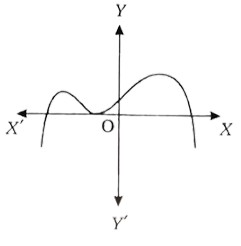 Correct
The number of zeroes of the polynomial from the graph is
→ 2Incorrect
The number of zeroes of the polynomial from the graph is
→ 2Unattempted
The number of zeroes of the polynomial from the graph is
→ 2 -
Question 33 of 120
33. Question
1 pointsCategory: Polycet MathematicsA pair of linear equations \( a_1 x + b_1 y + c_1 = 0 \) and \( a_2 x + b_2 y + c_2 = 0 \) is such that \( \frac{a_1}{a_2} ≠ \frac{b_1}{b_2} \), then they are:
Correct
If
 , the lines intersect
→ consistentIncorrect
If
, the lines intersect
→ consistentUnattempted
If
, the lines intersect
→ consistent -
Question 34 of 120
34. Question
1 pointsCategory: Polycet MathematicsThe lines 2x + 3y – 9 = 0 and 4x + 6y – 18 = 0 are:
Correct
 , so they are same line
→ coinciding linesIncorrect
, so they are same line
→ coinciding linesUnattempted
, so they are same line
→ coinciding lines -
Question 35 of 120
35. Question
1 pointsCategory: Polycet MathematicsIf x – 4y – 14 = 0 and 5x – y – 13 = 0 will have:
Correct
Lines intersect → unique solution
→ unique solutionIncorrect
Lines intersect → unique solution
→ unique solutionUnattempted
Lines intersect → unique solution
→ unique solution -
Question 36 of 120
36. Question
1 pointsCategory: Polycet MathematicsThe solution of x – 2y = 0 and 3x + 4y – 20 = 0 is:
Correct
Solve:
From , substitute in 2nd equation:
 , then
→ x = 4, y = 2Incorrect
Solve:
From, substitute in 2nd equation:, then
→ x = 4, y = 2Unattempted
Solve:
From, substitute in 2nd equation:, then
→ x = 4, y = 2 -
Question 37 of 120
37. Question
1 pointsCategory: Polycet MathematicsThe product of Karan's age five years ago and his age after 9 years from now is 32. This is represented by the quadratic equation:
Correct
Let present age = x
Then (x – 5)(x + 9) = 32 →
→ x² + 4x – 77 = 0Incorrect
Let present age = x
Then (x – 5)(x + 9) = 32 →
→ x² + 4x – 77 = 0Unattempted
Let present age = x
Then (x – 5)(x + 9) = 32 →
→ x² + 4x – 77 = 0 -
Question 38 of 120
38. Question
1 pointsCategory: Polycet MathematicsThe roots of the equation 6x2 – x – 2 = 0 are
Correct
 → Factor:
→ Incorrect
→ Factor:
→Unattempted
→ Factor:
→ -
Question 39 of 120
39. Question
1 pointsCategory: Polycet MathematicsThe equation 3x2 – 5x + 2 = 0 has
Correct
Discriminant

→ two real and unequal rootsIncorrect
Discriminant
→ two real and unequal rootsUnattempted
Discriminant
→ two real and unequal roots -
Question 40 of 120
40. Question
1 pointsCategory: Polycet MathematicsFind two numbers whose sum is 27 and product is 182.
Correct
x + y = 27, xy = 182 → try 13, 14 → 13 + 14 = 27 and 13×14 = 182
→ 13, 14Incorrect
x + y = 27, xy = 182 → try 13, 14 → 13 + 14 = 27 and 13×14 = 182
→ 13, 14Unattempted
x + y = 27, xy = 182 → try 13, 14 → 13 + 14 = 27 and 13×14 = 182
→ 13, 14 -
Question 41 of 120
41. Question
1 pointsCategory: Polycet MathematicsEach one of 100 boxes is filled with 50 one-rupee coins on the first day and 25 more coins are added every next day. The Arithmetic Progression (AP) representing this situation is
Correct
Starts with 50 and increases by 25 → AP: 50, 75, 100, 125…
→ 50, 75, 100, 125, …Incorrect
Starts with 50 and increases by 25 → AP: 50, 75, 100, 125…
→ 50, 75, 100, 125, …Unattempted
Starts with 50 and increases by 25 → AP: 50, 75, 100, 125…
→ 50, 75, 100, 125, … -
Question 42 of 120
42. Question
1 pointsCategory: Polycet MathematicsCommon difference of the AP 3, 1, -1, -3, … is
Correct
1 – 3 = -2
→ common difference = B. -2Incorrect
1 – 3 = -2
→ common difference = B. -2Unattempted
1 – 3 = -2
→ common difference = B. -2 -
Question 43 of 120
43. Question
1 pointsCategory: Polycet MathematicsTenth term of the AP 1, -1, -3, -5, … is
Correct
a = 1, d = -2 → 10th term = a + (10 – 1)d = 1 + 9(–2) = –17
→ -17Incorrect
a = 1, d = -2 → 10th term = a + (10 – 1)d = 1 + 9(–2) = –17
→ -17Unattempted
a = 1, d = -2 → 10th term = a + (10 – 1)d = 1 + 9(–2) = –17
→ -17 -
Question 44 of 120
44. Question
1 pointsCategory: Polycet MathematicsThe sum of the first 22 terms of the AP 8, 3, -2, … is
Correct
a = 8, d = -5 →
Sum =![\frac{n}{2} [2a + (n - 1)d] = \frac{22}{2} [16 + 21(-5)] = 11(16 - 105) = 11(-89) = -979](https://www.mcqbits.com/wp-content/ql-cache/quicklatex.com-a31f48b8550614fae92ad77c0885d141_l3.png "Rendered by QuickLaTeX.com")
→ -979Incorrect
a = 8, d = -5 →
Sum =
→ -979Unattempted
a = 8, d = -5 →
Sum =
→ -979 -
Question 45 of 120
45. Question
1 pointsCategory: Polycet MathematicsD and E are the midpoints of sides AB and AC of a triangle ABC respectively and BC = 10 cm. If DE ∥ BC, then the length of DE is
Correct
DE ∥ BC and D, E midpoints → DE = ½ BC = ½ × 10 = B. 5 cm
Incorrect
DE ∥ BC and D, E midpoints → DE = ½ BC = ½ × 10 = B. 5 cm
Unattempted
DE ∥ BC and D, E midpoints → DE = ½ BC = ½ × 10 = B. 5 cm
-
Question 46 of 120
46. Question
1 pointsCategory: Polycet MathematicsWhich of the following are not similar figures?
Correct
Isosceles triangles are not always similar
→ Isosceles trianglesIncorrect
Isosceles triangles are not always similar
→ Isosceles trianglesUnattempted
Isosceles triangles are not always similar
→ Isosceles triangles -
Question 47 of 120
47. Question
1 pointsCategory: Polycet MathematicsIf △ODC ∼△OBA and ∠BOC =125◦,then ∠DOC = ?
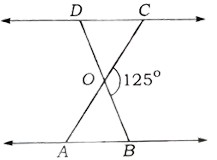 Correct
△ODC ∼ △OBA, so ∠DOC = ∠BOC = 125° (but in triangle ODC, angle should be < 90°, so it must be the matching corresponding angle). Since ∠BOC = 125°, ∠DOC is corresponding to ∠BOA = 180° – 125° = 55°
→ 55°Incorrect
△ODC ∼ △OBA, so ∠DOC = ∠BOC = 125° (but in triangle ODC, angle should be < 90°, so it must be the matching corresponding angle). Since ∠BOC = 125°, ∠DOC is corresponding to ∠BOA = 180° – 125° = 55°
→ 55°Unattempted
△ODC ∼ △OBA, so ∠DOC = ∠BOC = 125° (but in triangle ODC, angle should be < 90°, so it must be the matching corresponding angle). Since ∠BOC = 125°, ∠DOC is corresponding to ∠BOA = 180° – 125° = 55°
→ 55° -
Question 48 of 120
48. Question
1 pointsCategory: Polycet MathematicsIf \( M\left(\frac{p}{3}, 4\right) \) is the midpoint of the line segment joining A(-6, 5) and B(-4, 3), then p = ?
Correct
Midpoint of A(-6, 5) and B(-4, 3):
Midpoint =
→ -15Incorrect
Midpoint of A(-6, 5) and B(-4, 3):
Midpoint =
→ -15Unattempted
Midpoint of A(-6, 5) and B(-4, 3):
Midpoint =
→ -15 -
Question 49 of 120
49. Question
1 pointsCategory: Polycet MathematicsThe distance between the points (2, 3) and (4, 1) is
Correct
Distance =

→ 2√2Incorrect
Distance =
→ 2√2Unattempted
Distance =
→ 2√2 -
Question 50 of 120
50. Question
1 pointsCategory: Polycet MathematicsThe coordinates of the point P(x, y) which divides the line segment joining the points \( A(x_1, y_1) \) and \( B(x_2, y_2) \) internally in the ratio \( m_1 : m_2 \) are
Correct
Internal division formula:
→ Incorrect
Internal division formula:
→Unattempted
Internal division formula:
→ -
Question 51 of 120
51. Question
1 pointsCategory: Polycet PhysicsA continuous and closed path of an electric current is called an
Correct
A continuous and closed path of an electric current is called an
→ electric circuitIncorrect
A continuous and closed path of an electric current is called an
→ electric circuitUnattempted
A continuous and closed path of an electric current is called an
→ electric circuit -
Question 52 of 120
52. Question
1 pointsCategory: Polycet PhysicsIf a net charge Q flows across any cross-section of a conductor in time t, then the current I through the cross-section is
Correct
 Incorrect
Unattempted
-
Question 53 of 120
53. Question
1 pointsCategory: Polycet PhysicsOne coulomb is equivalent to the charge contained in nearly
Correct
1 coulomb ≈ charge of
 electrons
→ 6.25 × 10¹⁸ electronsIncorrect
1 coulomb ≈ charge of
electrons
→ 6.25 × 10¹⁸ electronsUnattempted
1 coulomb ≈ charge of
electrons
→ 6.25 × 10¹⁸ electrons -
Question 54 of 120
54. Question
1 pointsCategory: Polycet PhysicsWork done to move a unit charge from one point to the other in an electric circuit is called
Correct
Work done to move unit charge = potential difference
→ electric potential differenceIncorrect
Work done to move unit charge = potential difference
→ electric potential differenceUnattempted
Work done to move unit charge = potential difference
→ electric potential difference -
Question 55 of 120
55. Question
1 pointsCategory: Polycet PhysicsSI unit of electrical potential difference is
Correct
SI unit of potential difference
→ voltIncorrect
SI unit of potential difference
→ voltUnattempted
SI unit of potential difference
→ volt -
Question 56 of 120
56. Question
1 pointsCategory: Polycet PhysicsThe device used to measure electric current in a circuit is called:
Correct
Device to measure current
→ ammeterIncorrect
Device to measure current
→ ammeterUnattempted
Device to measure current
→ ammeter -
Question 57 of 120
57. Question
1 pointsCategory: Polycet PhysicsIn an electric circuit, three resistors 5Ω, 10Ω and 15Ω are connected in series across a 60V battery. Then the current flowing in the circuit is:
Correct
Series resistors:
 ,
, 
→ 2AIncorrect
Series resistors:
,
→ 2AUnattempted
Series resistors:
,
→ 2A -
Question 58 of 120
58. Question
1 pointsCategory: Polycet PhysicsThe heat produced in a 4Ω resistor when an electric current of 5A flows in it for 2 seconds is
Correct
Heat =
 → Not in options, but closest to
→ 200J (This seems like an error; correct answer should be 100J)Incorrect
Heat =
→ Not in options, but closest to
→ 200J (This seems like an error; correct answer should be 100J)Unattempted
Heat =
→ Not in options, but closest to
→ 200J (This seems like an error; correct answer should be 100J) -
Question 59 of 120
59. Question
1 pointsCategory: Polycet PhysicsOne kilowatt hour is equal to
Correct
1 kWh =

→ 3.6 × 10⁶ JIncorrect
1 kWh =
→ 3.6 × 10⁶ JUnattempted
1 kWh =
→ 3.6 × 10⁶ J -
Question 60 of 120
60. Question
1 pointsCategory: Polycet PhysicsThe power of an electric motor that takes 5A electric current from a 220V transmission line is:
Correct

→ 1100WIncorrect
→ 1100WUnattempted
→ 1100W -
Question 61 of 120
61. Question
1 pointsCategory: Polycet PhysicsThe region surrounding a magnet in which the influence of that magnet can be detected is called
Correct
Region around a magnet with magnetic effect
→ magnetic fieldIncorrect
Region around a magnet with magnetic effect
→ magnetic fieldUnattempted
Region around a magnet with magnetic effect
→ magnetic field -
Question 62 of 120
62. Question
1 pointsCategory: Polycet PhysicsIf the electric current through a copper wire increases, the magnitude of the magnetic field produced at a given point:
Correct
More current → stronger magnetic field
→ increasesIncorrect
More current → stronger magnetic field
→ increasesUnattempted
More current → stronger magnetic field
→ increases -
Question 63 of 120
63. Question
1 pointsCategory: Polycet PhysicsThe magnetic field at all points inside a solenoid carrying electric current:
Correct
Magnetic field inside a solenoid is
→ uniformIncorrect
Magnetic field inside a solenoid is
→ uniformUnattempted
Magnetic field inside a solenoid is
→ uniform -
Question 64 of 120
64. Question
1 pointsCategory: Polycet PhysicsThe direction of force on a current carrying conductor in a magnetic field is given by
Correct
Direction of force
→ Fleming's left-hand ruleIncorrect
Direction of force
→ Fleming's left-hand ruleUnattempted
Direction of force
→ Fleming's left-hand rule -
Question 65 of 120
65. Question
1 pointsCategory: Polycet PhysicsThe magnetic field produced by a current carrying circular loop is strongest at
Correct
Strongest magnetic field in circular loop
→ the center of the loopIncorrect
Strongest magnetic field in circular loop
→ the center of the loopUnattempted
Strongest magnetic field in circular loop
→ the center of the loop -
Question 66 of 120
66. Question
1 pointsCategory: Polycet PhysicsIn an electric circuit, the device used to prevent damage to the electrical appliances due to overloading is:
Correct
Device to prevent damage from overload
→ electric fuseIncorrect
Device to prevent damage from overload
→ electric fuseUnattempted
Device to prevent damage from overload
→ electric fuse -
Question 67 of 120
67. Question
1 pointsCategory: Polycet PhysicsWhich of the following is not an alloy?
Correct
Iron is a pure element, others are alloys
→ IronIncorrect
Iron is a pure element, others are alloys
→ IronUnattempted
Iron is a pure element, others are alloys
→ Iron -
Question 68 of 120
68. Question
1 pointsCategory: Polycet PhysicsIdentify the wrong statement among the following:
Correct
Wrong statement: Inside magnet, field is from south to north, not north to south
→ Inside the magnet, the direction of field lines is from north pole to south poleIncorrect
Wrong statement: Inside magnet, field is from south to north, not north to south
→ Inside the magnet, the direction of field lines is from north pole to south poleUnattempted
Wrong statement: Inside magnet, field is from south to north, not north to south
→ Inside the magnet, the direction of field lines is from north pole to south pole -
Question 69 of 120
69. Question
1 pointsCategory: Polycet PhysicsSI unit of electrical resistivity is
Correct
SI unit of resistivity
→ ΩmIncorrect
SI unit of resistivity
→ ΩmUnattempted
SI unit of resistivity
→ Ωm -
Question 70 of 120
70. Question
1 pointsCategory: Polycet PhysicsWhich of the following is an insulator?
Correct
Rubber is a poor conductor
→ RubberIncorrect
Rubber is a poor conductor
→ RubberUnattempted
Rubber is a poor conductor
→ Rubber -
Question 71 of 120
71. Question
1 pointsCategory: Polycet PhysicsThe image formed by a plane mirror is always:
Correct
The image formed by a plane mirror is always
→ virtual and erectIncorrect
The image formed by a plane mirror is always
→ virtual and erectUnattempted
The image formed by a plane mirror is always
→ virtual and erect -
Question 72 of 120
72. Question
1 pointsCategory: Polycet PhysicsThe distance between the pole and the principal focus of a spherical mirror is called:
Correct
Distance between pole and principal focus
→ focal lengthIncorrect
Distance between pole and principal focus
→ focal lengthUnattempted
Distance between pole and principal focus
→ focal length -
Question 73 of 120
73. Question
1 pointsCategory: Polycet PhysicsA diminished, virtual and erect image is formed by a
Correct
A diminished, virtual, erect image is formed by
→ convex mirrorIncorrect
A diminished, virtual, erect image is formed by
→ convex mirrorUnattempted
A diminished, virtual, erect image is formed by
→ convex mirror -
Question 74 of 120
74. Question
1 pointsCategory: Polycet PhysicsThe mirror used by a dentist to see a large image of the teeth of the patients is
Correct
Mirror used by dentists
→ concave mirrorIncorrect
Mirror used by dentists
→ concave mirrorUnattempted
Mirror used by dentists
→ concave mirror -
Question 75 of 120
75. Question
1 pointsCategory: Polycet PhysicsA ray of light travelling in air enters obliquely into water. This light ray
Correct
Light bends towards the normal when entering water from air
→ bends towards the normalIncorrect
Light bends towards the normal when entering water from air
→ bends towards the normalUnattempted
Light bends towards the normal when entering water from air
→ bends towards the normal -
Question 76 of 120
76. Question
1 pointsCategory: Polycet PhysicsThe focal length of a spherical mirror is 10cm. Its radius of curvature is:
Correct

→ 20cmIncorrect
→ 20cmUnattempted
→ 20cm -
Question 77 of 120
77. Question
1 pointsCategory: Polycet PhysicsAn object placed between the principal focus and center of curvature of a convex lens forms an image:
Correct
Object between F and 2F (focus and center of curvature) in convex lens → image is beyond 2F
→ beyond the center of curvatureIncorrect
Object between F and 2F (focus and center of curvature) in convex lens → image is beyond 2F
→ beyond the center of curvatureUnattempted
Object between F and 2F (focus and center of curvature) in convex lens → image is beyond 2F
→ beyond the center of curvature -
Question 78 of 120
78. Question
1 pointsCategory: Polycet PhysicsThe power of a lens is 4D.Its focal length is
Correct
Power

→ 25cmIncorrect
Power
→ 25cmUnattempted
Power
→ 25cm -
Question 79 of 120
79. Question
1 pointsCategory: Polycet PhysicsIf the height of the image is equal to the height of an object placed near a spherical lens, then the magnification m is
Correct
Image height = object height → magnification = 1
→ equal to 1Incorrect
Image height = object height → magnification = 1
→ equal to 1Unattempted
Image height = object height → magnification = 1
→ equal to 1 -
Question 80 of 120
80. Question
1 pointsCategory: Polycet PhysicsAn object is placed at a distance of 30cm from a concave lens of focal length 20cm.
The image distance is:Correct
Use lens formula:

Image distance = 12cm
→ 12cmIncorrect
Use lens formula:
Image distance = 12cm
→ 12cmUnattempted
Use lens formula:
Image distance = 12cm
→ 12cm -
Question 81 of 120
81. Question
1 pointsCategory: Polycet PhysicsThe delicate membrane having enormous number of light sensitive cells is:
Correct
Light-sensitive membrane
→ retinaIncorrect
Light-sensitive membrane
→ retinaUnattempted
Light-sensitive membrane
→ retina -
Question 82 of 120
82. Question
1 pointsCategory: Polycet PhysicsThe amount of light entering the eye is regulated and controlled by the
Correct
Light entry is regulated by
→ pupilIncorrect
Light entry is regulated by
→ pupilUnattempted
Light entry is regulated by
→ pupil -
Question 83 of 120
83. Question
1 pointsCategory: Polycet PhysicsThe minimum distance at which the objects can be seen most distinctly without strain is called
Correct
Minimum distinct vision distance
→ near point of the eyeIncorrect
Minimum distinct vision distance
→ near point of the eyeUnattempted
Minimum distinct vision distance
→ near point of the eye -
Question 84 of 120
84. Question
1 pointsCategory: Polycet PhysicsA person can see distant objects clearly but cannot see nearby objects distinctly. The person is suffering from:
Correct
Can see distant objects, not nearby
→ hypermetropiaIncorrect
Can see distant objects, not nearby
→ hypermetropiaUnattempted
Can see distant objects, not nearby
→ hypermetropia -
Question 85 of 120
85. Question
1 pointsCategory: Polycet PhysicsThe defect myopia can be corrected by using a:
Correct
Myopia (near-sightedness) is corrected using a
→ concave lensIncorrect
Myopia (near-sightedness) is corrected using a
→ concave lensUnattempted
Myopia (near-sightedness) is corrected using a
→ concave lens -
Question 86 of 120
86. Question
1 pointsCategory: Polycet PhysicsThe band of the coloured components of a light beam is called its
Correct
Colored band of light
→ spectrumIncorrect
Colored band of light
→ spectrumUnattempted
Colored band of light
→ spectrum -
Question 87 of 120
87. Question
1 pointsCategory: Polycet PhysicsThe formation of a rainbow in the sky involves:
Correct
Rainbow involves
→ refraction, dispersion, reflectionIncorrect
Rainbow involves
→ refraction, dispersion, reflectionUnattempted
Rainbow involves
→ refraction, dispersion, reflection -
Question 88 of 120
88. Question
1 pointsCategory: Polycet PhysicsAdvance sunrise and delayed sunset are due to
Correct
Advance sunrise/delayed sunset
→ atmospheric refractionIncorrect
Advance sunrise/delayed sunset
→ atmospheric refractionUnattempted
Advance sunrise/delayed sunset
→ atmospheric refraction -
Question 89 of 120
89. Question
1 pointsCategory: Polycet PhysicsThe blue colour of clear sky is due to
Correct
Blue sky due to
→ scattering of lightIncorrect
Blue sky due to
→ scattering of lightUnattempted
Blue sky due to
→ scattering of light -
Question 90 of 120
90. Question
1 pointsCategory: Polycet PhysicsIf the speed of light in glass is 2 × 10⁸m/s and the speed of light in air is 3×10⁸m/s, the refractive index of glass with respect to air is:
Correct
Refractive index

→ 1.5Incorrect
Refractive index
→ 1.5Unattempted
Refractive index
→ 1.5 -
Question 91 of 120
91. Question
1 pointsCategory: Polycet ChemistryWhy are cooking vessels made up of metals like copper and aluminium?
Correct
Cooking vessels are made of copper and aluminum because
→ Because they are good conductors of heatIncorrect
Cooking vessels are made of copper and aluminum because
→ Because they are good conductors of heatUnattempted
Cooking vessels are made of copper and aluminum because
→ Because they are good conductors of heat -
Question 92 of 120
92. Question
1 pointsCategory: Polycet ChemistryWhy are metals like potassium and sodium stored in kerosene oil?
Correct
Potassium and sodium are stored in kerosene because
→ To prevent accidental fires due to their vigorous reaction with oxygenIncorrect
Potassium and sodium are stored in kerosene because
→ To prevent accidental fires due to their vigorous reaction with oxygenUnattempted
Potassium and sodium are stored in kerosene because
→ To prevent accidental fires due to their vigorous reaction with oxygen -
Question 93 of 120
93. Question
1 pointsCategory: Polycet ChemistryWhat is the process of forming a thick oxide layer on aluminium called?
Correct
Thick oxide layer formation on aluminum is called
→ AnodisingIncorrect
Thick oxide layer formation on aluminum is called
→ AnodisingUnattempted
Thick oxide layer formation on aluminum is called
→ Anodising -
Question 94 of 120
94. Question
1 pointsCategory: Polycet ChemistryWhat happens when zinc is added to a solution of iron (II) sulfate?
Correct
Zinc is more reactive than iron, so it displaces iron from FeSO₄
→ Zinc displaces iron and forms zinc sulfateIncorrect
Zinc is more reactive than iron, so it displaces iron from FeSO₄
→ Zinc displaces iron and forms zinc sulfateUnattempted
Zinc is more reactive than iron, so it displaces iron from FeSO₄
→ Zinc displaces iron and forms zinc sulfate -
Question 95 of 120
95. Question
1 pointsCategory: Polycet ChemistryWhat type of bond is formed when a metal transfers electrons to a non-metal?
Correct
Metal transfers electrons to a non-metal
→ Ionic bondIncorrect
Metal transfers electrons to a non-metal
→ Ionic bondUnattempted
Metal transfers electrons to a non-metal
→ Ionic bond -
Question 96 of 120
96. Question
1 pointsCategory: Polycet ChemistryWhat is the name of the process where carbonate ores are converted to oxides by heating in limited air?
Correct
Carbonate ores to oxides by heating in limited air
→ CalcinationIncorrect
Carbonate ores to oxides by heating in limited air
→ CalcinationUnattempted
Carbonate ores to oxides by heating in limited air
→ Calcination -
Question 97 of 120
97. Question
1 pointsCategory: Polycet ChemistryWhich of the following is an ore of mercury?
Correct
Ore of mercury
→ CinnabarIncorrect
Ore of mercury
→ CinnabarUnattempted
Ore of mercury
→ Cinnabar -
Question 98 of 120
98. Question
1 pointsCategory: Polycet ChemistryWhat kind of bond exists in a molecule of nitrogen (N2)?
Correct
Nitrogen molecule (N₂) has
→ Triple bondIncorrect
Nitrogen molecule (N₂) has
→ Triple bondUnattempted
Nitrogen molecule (N₂) has
→ Triple bond -
Question 99 of 120
99. Question
1 pointsCategory: Polycet ChemistryWhat makes graphite a good conductor of electricity?
Correct
Graphite conducts electricity due to
→ Free electrons in its layered structureIncorrect
Graphite conducts electricity due to
→ Free electrons in its layered structureUnattempted
Graphite conducts electricity due to
→ Free electrons in its layered structure -
Question 100 of 120
100. Question
1 pointsCategory: Polycet ChemistryWhat property allows carbon to form large molecules by bonding with itself?
Correct
Property of carbon forming long chains
→ CatenationIncorrect
Property of carbon forming long chains
→ CatenationUnattempted
Property of carbon forming long chains
→ Catenation -
Question 101 of 120
101. Question
1 pointsCategory: Polycet ChemistryCompounds with the same molecular formula but different structures are called
Correct
Compounds with the same molecular formula but different structures are called
→ IsomersIncorrect
Compounds with the same molecular formula but different structures are called
→ IsomersUnattempted
Compounds with the same molecular formula but different structures are called
→ Isomers -
Question 102 of 120
102. Question
1 pointsCategory: Polycet ChemistryWhich series contains compounds differing by a -CH2 – unit?
Correct
Series with compounds differing by -CH₂- unit
→ Homologous seriesIncorrect
Series with compounds differing by -CH₂- unit
→ Homologous seriesUnattempted
Series with compounds differing by -CH₂- unit
→ Homologous series -
Question 103 of 120
103. Question
1 pointsCategory: Polycet ChemistryWhich functional group is present in carboxylic acids?
Correct
Functional group in carboxylic acids
→ -COOHIncorrect
Functional group in carboxylic acids
→ -COOHUnattempted
Functional group in carboxylic acids
→ -COOH -
Question 104 of 120
104. Question
1 pointsCategory: Polycet ChemistryWhich substance can oxidize ethanol to ethanoic acid?
Correct
Substance that oxidizes ethanol to ethanoic acid
→ Alkaline potassium permanganateIncorrect
Substance that oxidizes ethanol to ethanoic acid
→ Alkaline potassium permanganateUnattempted
Substance that oxidizes ethanol to ethanoic acid
→ Alkaline potassium permanganate -
Question 105 of 120
105. Question
1 pointsCategory: Polycet ChemistryWhat is the product formed when magnesium ribbon is burnt in oxygen?
Correct
Product when magnesium ribbon burns in oxygen
→ Magnesium oxideIncorrect
Product when magnesium ribbon burns in oxygen
→ Magnesium oxideUnattempted
Product when magnesium ribbon burns in oxygen
→ Magnesium oxide -
Question 106 of 120
106. Question
1 pointsCategory: Polycet ChemistryWhat is the law of conservation of mass?
Correct
Law of conservation of mass
→ Mass can neither be created nor destroyed in a chemical reactionIncorrect
Law of conservation of mass
→ Mass can neither be created nor destroyed in a chemical reactionUnattempted
Law of conservation of mass
→ Mass can neither be created nor destroyed in a chemical reaction -
Question 107 of 120
107. Question
1 pointsCategory: Polycet ChemistryWhat is the significance of writing physical states in a chemical equation?
Correct
Significance of writing physical states
→ To provide information about the physical form of substancesIncorrect
Significance of writing physical states
→ To provide information about the physical form of substancesUnattempted
Significance of writing physical states
→ To provide information about the physical form of substances -
Question 108 of 120
108. Question
1 pointsCategory: Polycet ChemistryWhat is the product formed when slaked lime reacts with carbon dioxide during whitewashing?
Correct
Product of slaked lime and CO₂ (whitewashing)
→ Calcium carbonateIncorrect
Product of slaked lime and CO₂ (whitewashing)
→ Calcium carbonateUnattempted
Product of slaked lime and CO₂ (whitewashing)
→ Calcium carbonate -
Question 109 of 120
109. Question
1 pointsCategory: Polycet ChemistryWhy does the iron nail become brownish when dipped in copper sulfate solution?
Correct
Iron nail turns brown in CuSO₄ solution because
→ Copper gets deposited on the nailIncorrect
Iron nail turns brown in CuSO₄ solution because
→ Copper gets deposited on the nailUnattempted
Iron nail turns brown in CuSO₄ solution because
→ Copper gets deposited on the nail -
Question 110 of 120
110. Question
1 pointsCategory: Polycet ChemistryWhat causes corrosion of iron?
Correct
Cause of corrosion of iron
→ Both Reaction with oxygen and moisture and Contact with acidsIncorrect
Cause of corrosion of iron
→ Both Reaction with oxygen and moisture and Contact with acidsUnattempted
Cause of corrosion of iron
→ Both Reaction with oxygen and moisture and Contact with acids -
Question 111 of 120
111. Question
1 pointsCategory: Polycet ChemistryWhat is the process called when fats and oils are oxidised and their smell and taste change?
Correct
Oxidation of fats/oils changing smell/taste
→ RancidityIncorrect
Oxidation of fats/oils changing smell/taste
→ RancidityUnattempted
Oxidation of fats/oils changing smell/taste
→ Rancidity -
Question 112 of 120
112. Question
1 pointsCategory: Polycet ChemistryIf someone in your family is suffering from acidity after overeating, which of the following would you suggest as a remedy?
Correct
Remedy for acidity after overeating
→ Baking soda solutionIncorrect
Remedy for acidity after overeating
→ Baking soda solutionUnattempted
Remedy for acidity after overeating
→ Baking soda solution -
Question 113 of 120
113. Question
1 pointsCategory: Polycet ChemistryWhich of the following can be used as olfactory indicators?
Correct
Olfactory indicators → Vanilla essence, onion and clove oil
Incorrect
Olfactory indicators → Vanilla essence, onion and clove oil
Unattempted
Olfactory indicators → Vanilla essence, onion and clove oil
-
Question 114 of 120
114. Question
1 pointsCategory: Polycet ChemistryPhenolphthalein is used as an indicator in the reaction between
Correct
Phenolphthalein is used in reaction between
→ Acid and baseIncorrect
Phenolphthalein is used in reaction between
→ Acid and baseUnattempted
Phenolphthalein is used in reaction between
→ Acid and base -
Question 115 of 120
115. Question
1 pointsCategory: Polycet ChemistryWhich of the following is a synthetic indicator?
Correct
Synthetic indicator
→ Methyl orangeIncorrect
Synthetic indicator
→ Methyl orangeUnattempted
Synthetic indicator
→ Methyl orange -
Question 116 of 120
116. Question
1 pointsCategory: Polycet ChemistryWhy do acidic solutions conduct electricity?
Correct
Acidic solutions conduct electricity due to
→ Presence of ions in the solutionIncorrect
Acidic solutions conduct electricity due to
→ Presence of ions in the solutionUnattempted
Acidic solutions conduct electricity due to
→ Presence of ions in the solution -
Question 117 of 120
117. Question
1 pointsCategory: Polycet ChemistryTooth decay begins when the pH of the mouth drops below:
Correct
Tooth decay starts below pH
→ 5.5Incorrect
Tooth decay starts below pH
→ 5.5Unattempted
Tooth decay starts below pH
→ 5.5 -
Question 118 of 120
118. Question
1 pointsCategory: Polycet ChemistryWhat chemical is responsible for the pain caused by a bee sting?
Correct
Pain from bee sting is due to
→ Methanoic acidIncorrect
Pain from bee sting is due to
→ Methanoic acidUnattempted
Pain from bee sting is due to
→ Methanoic acid -
Question 119 of 120
119. Question
1 pointsCategory: Polycet ChemistryWhat is the chemical formula of Plaster of Paris?
Correct
Chemical formula of Plaster of Paris
→ CaSO₄·½H₂OIncorrect
Chemical formula of Plaster of Paris
→ CaSO₄·½H₂OUnattempted
Chemical formula of Plaster of Paris
→ CaSO₄·½H₂O -
Question 120 of 120
120. Question
1 pointsCategory: Polycet ChemistryWhich property of metals describes their shiny surface?
Correct
Property describing shiny surface of metals
→ Metallic lusterIncorrect
Property describing shiny surface of metals
→ Metallic lusterUnattempted
Property describing shiny surface of metals
→ Metallic luster
AP Polycet(polytechnic) EXAM PATTERN AND SYLLABUS:
1) The examination (POLYCET) will be of 2 Hrs 30 Minutes duration consisting of only one
paper as per the syllabus in the subjects of Mathematics, Physics, Chemistry & Biology
of X Class (S.S.C.) Examination held in Academic Year 2020-2021 as prescribed by the
Board of Secondary Education, Telangana State.
2) The POLYCET Examination will be conducted for 150 marks in
Mathematics (60 marks) +
Physics (30 Marks) +
Chemistry (30 Marks) +
Biology (30 Marks).
3) The Duration of Examination is 2 ½ hours.
4) The candidates who are willing to take admission in to Agricultural & Veterinary Diploma
Courses offered by PJTSAU & PVNRTVU attempt Biology Questions.
5) The Question Paper Pattern will be:
| Subjects | No. of Questions | Marks |
| Physics | 30 | 30 |
| Chemistry | 30 | 30 |
| Mathematics | 60 | 60 |
| Biology | 30 | 30 |
| Total | 150 | 150 |
No negative marks for wrong answers.
AP Polycet SYLLABUS FOR COMMON ENTRANCE TEST:
The Syllabus of Mathematics, Physics, Chemistry and Biology for POLYCET-2021 is the same as that of SSC Examination for the A.Y 2020-21 conducted by the Board of Secondary Education, Telangana.
Syllabus of Mathematics:
- Real Numbers
- Number System
- Sets
- Polynomials
- Algebra
- Progressions
- Quadratic Equations
- Linear Equations
- Geometry
- Coordinate Geometry
- Surface Areas & Volume
- Trigonometry
- Mensuration
- Probability
- Statistics
- Mathematical Modeling
Syllabus of Physics:
- A structure of Atom
- Chemical Bonding
- Carbon & its Compounds
- Heat
- Classification of Elements
- Magnetic Effects of Electric Current
- Chemical Equations & Reactions
- Acids, Bases & Salts
- Refraction of Light at Plane Surface
- Refraction of Light at Curved Surface
- Human Eye & Colorful World
- Electricity
- Metallurgy
- Reflection of Light
Syllabus of Chemistry:
- The States of Matter
- Surface Chemistry
- Electrochemistry
- Redox Reactions
- Polymers
- Nuclear Chemistry
- Chemical and Ionic Equilibrium
- Phase equilibrium & Solutions
- Chemical Thermodynamics
- Basic Concepts in Organic Chemistry and Stereochemistry
- Organic compounds with the functional group containing nitrogen
- Chemical Kinetics
- Atomic Structure
- Chemistry in everyday life
- Urea and malonic ester
- Qualitative and quantitative analysis and purification of organic compounds
- Preparation, Properties, and Reactions of Alkanes, Alkenes, Alkynes
- Organic compounds with the functional group containing oxygen
- Reactions of Benzene and heterocyclic compounds
- Organic compounds with the functional group containing halogens
- Biomolecules – Carbohydrates, Protein, Vitamins, Nucleic Acid, Lipids, Hormones Reactions of a, b unsaturated carbonyl and acids
- Spectroscopy measurements including IR, UV, NMR (proton and carbon 13)
- Environmental Chemistry, etc.
Syllabus of Biology:
1. Nutrition
2. Respiration
3. Transportation
4. Excretion
5. Coordination
6. Reproduction
7. Coordination in life process
8. Heredity
9. Our environment
10. Natural resources
1. As POLYCET tests are separately being conducted by the State of Telangana and Andhra Pradesh, the candidates of Telangana intending to take admission in the courses offered in State wide institutions of Andhra Pradesh State, in the ratio of 42:36:22 in AU/OU/SVU regions, or desirous of seeking admission under 15% ‘unreserved’ quota offered in Andhra Pradesh State, shall appear for POLYCET-2021 conducted by the State of Andhra Pradesh.
2. The seats in various Diploma courses of PJTSAU will be filled up by PJTSAU based on the ranks obtained in the POLYCET 2021. The University will give separate counseling and admission notifications. The interested candidates need to apply for the Diploma courses offered by PJTSAU.
3. The seats in various Diploma courses of PVNRTVU will be filled up by PVNRTVU based on the ranks obtained in the POLYCET 2021. The University will give separate counseling and admission notifications. The interested candidates need to apply for the Diploma courses offered by PVNRTVU.
4. 6 years integrated (2+4) undergraduate (B.Tech.) courses offered by Rajiv Gandhi University of Knowledge Technologies (RGUKT), Basar, Nirmal Dist, Telangana for AY-2022-23.
Leaderboard: Polycet Mock Test 12 - 2025 AP
| Pos. | Name | Entered on | Points | Result |
|---|---|---|---|---|
| Table is loading | ||||
| No data available | ||||