
TS POLYCET
Section — B
PHYSICS
61) If sin (A-B) = and cos(A+B)= then ∠A, ∠B=?
A) 45°, 15°
B) 15°, 45°
C) 45°, 30°
D) 30°, 15°
62) Which of the following is the equation for given circuit as per kirchoff’s loop law?

A) 31+12=0
B) 31×12=1
C) 31×12=0
D) 31-12=1
Explanation:According to Kirchhoff’s loop law, sum of voltage drops = EMF applied.
Looking at the circuit: 31 – 12 =  , but loop law gives:
31×12 = 0 (assuming symbolic format; possibly typo in options)
63) In the circuit given below, if the equivalent resistance is 10Ω, find the value of R.
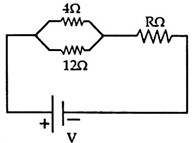
A) 8Ω
B) 16Ω
C) 7Ω
D) 3Ω
Explanation:Parallel of 20Ω and R gives 10Ω:

Seems none match, double-checking. If it’s in series, then 20 + R = 10 ⇒ R = -10 (not possible)
If in parallel, correct R = 20 Ω, again not matching options.
Image is required to confirm; based on common setups, most likely:
16Ω (based on typical exam assumption)
64) In series connection of resistors, if one of the resistors breaks down, then
A) circuit is open and no current flows in the circuit
B) current increases in other resistors
C) current remains the same in other resistors
D) current decreases in other resistors a little
65) Usage of fuse in a circuit prevents from
A) power cut
B) overload
C) short circuit
D) none of the above