
AP Polycet Mock Test 9
0 of 120 questions completed
Questions:
- 1
- 2
- 3
- 4
- 5
- 6
- 7
- 8
- 9
- 10
- 11
- 12
- 13
- 14
- 15
- 16
- 17
- 18
- 19
- 20
- 21
- 22
- 23
- 24
- 25
- 26
- 27
- 28
- 29
- 30
- 31
- 32
- 33
- 34
- 35
- 36
- 37
- 38
- 39
- 40
- 41
- 42
- 43
- 44
- 45
- 46
- 47
- 48
- 49
- 50
- 51
- 52
- 53
- 54
- 55
- 56
- 57
- 58
- 59
- 60
- 61
- 62
- 63
- 64
- 65
- 66
- 67
- 68
- 69
- 70
- 71
- 72
- 73
- 74
- 75
- 76
- 77
- 78
- 79
- 80
- 81
- 82
- 83
- 84
- 85
- 86
- 87
- 88
- 89
- 90
- 91
- 92
- 93
- 94
- 95
- 96
- 97
- 98
- 99
- 100
- 101
- 102
- 103
- 104
- 105
- 106
- 107
- 108
- 109
- 110
- 111
- 112
- 113
- 114
- 115
- 116
- 117
- 118
- 119
- 120
Information
Polycet Mock Test 9 – 2021 TS
You have already completed the Test before. Hence you can not start it again.
Test is loading...
You must sign in or sign up to start the Test.
You have to finish following quiz, to start this Test:
Congratulations!!!" Polycet Mock Test 9 - 2021 TS "
0 of 120 questions answered correctly
Your time:
Time has elapsed
Your Final Score is : 0
You have attempted : 0
Number of Correct Questions : 0 and scored 0
Number of Incorrect Questions : 0 and Negative marks 0
| Average score |
|
| Your score |
|
-
Polycet Chemistry
You have attempted: 0
Number of Correct Questions: 0 and scored 0
Number of Incorrect Questions: 0 and Negative marks 0
-
Polycet Mathematics
You have attempted: 0
Number of Correct Questions: 0 and scored 0
Number of Incorrect Questions: 0 and Negative marks 0
-
Polycet Physics
You have attempted: 0
Number of Correct Questions: 0 and scored 0
Number of Incorrect Questions: 0 and Negative marks 0
| Pos. | Name | Entered on | Points | Result |
|---|---|---|---|---|
| Table is loading | ||||
| No data available | ||||
- 1
- 2
- 3
- 4
- 5
- 6
- 7
- 8
- 9
- 10
- 11
- 12
- 13
- 14
- 15
- 16
- 17
- 18
- 19
- 20
- 21
- 22
- 23
- 24
- 25
- 26
- 27
- 28
- 29
- 30
- 31
- 32
- 33
- 34
- 35
- 36
- 37
- 38
- 39
- 40
- 41
- 42
- 43
- 44
- 45
- 46
- 47
- 48
- 49
- 50
- 51
- 52
- 53
- 54
- 55
- 56
- 57
- 58
- 59
- 60
- 61
- 62
- 63
- 64
- 65
- 66
- 67
- 68
- 69
- 70
- 71
- 72
- 73
- 74
- 75
- 76
- 77
- 78
- 79
- 80
- 81
- 82
- 83
- 84
- 85
- 86
- 87
- 88
- 89
- 90
- 91
- 92
- 93
- 94
- 95
- 96
- 97
- 98
- 99
- 100
- 101
- 102
- 103
- 104
- 105
- 106
- 107
- 108
- 109
- 110
- 111
- 112
- 113
- 114
- 115
- 116
- 117
- 118
- 119
- 120
- Answered
- Review
-
Question 1 of 120
1. Question
1 pointsCategory: Polycet MathematicsThe value of
 is …….Correct
We are given:

Shortcut Method:
Recall:
Now, write as an exponent:
So:
Correct Answer: Incorrect
We are given:
Shortcut Method:
Recall:
Now, write as an exponent:
So:
Correct Answer:Unattempted
We are given:
Shortcut Method:
Recall:
Now, write as an exponent:
So:
Correct Answer: -
Question 2 of 120
2. Question
1 pointsCategory: Polycet MathematicsCardinal number of the set A={-2,-1,0,1,2} is
Correct
To find the **cardinal numberof a set, simply **count the number of distinct elementsin it.
Set A = {−2, −1, 0, 1, 2}
Number of elements = 5
Correct Answer: A. 5
Want a shortcut trick for identifying cardinal numbers in big sets quickly?Incorrect
To find the **cardinal numberof a set, simply **count the number of distinct elementsin it.
Set A = {−2, −1, 0, 1, 2}
Number of elements = 5
Correct Answer: A. 5
Want a shortcut trick for identifying cardinal numbers in big sets quickly?Unattempted
To find the **cardinal numberof a set, simply **count the number of distinct elementsin it.
Set A = {−2, −1, 0, 1, 2}
Number of elements = 5
Correct Answer: A. 5
Want a shortcut trick for identifying cardinal numbers in big sets quickly? -
Question 3 of 120
3. Question
1 pointsCategory: Polycet MathematicsThe zeroes of the quadratic polynomial x2+24x+119 are
Correct
We're given the quadratic polynomial:

To find the nature of its zeroes, we can factor it.
Try splitting the middle term:
We need two numbers that add up to 24and multiply to 119.
Check factors of 119:
119 = 17 × 7
And:
17 + 7 = 24
So we can write:
The zeroes are:
Both are negative.
Correct Answer: both negative
Want a shortcut method to factor quadratics quickly using a table?Incorrect
We're given the quadratic polynomial:
To find the nature of its zeroes, we can factor it.
Try splitting the middle term:
We need two numbers that add up to 24and multiply to 119.
Check factors of 119:
119 = 17 × 7
And:
17 + 7 = 24
So we can write:
The zeroes are:
Both are negative.
Correct Answer: both negative
Want a shortcut method to factor quadratics quickly using a table?Unattempted
We're given the quadratic polynomial:
To find the nature of its zeroes, we can factor it.
Try splitting the middle term:
We need two numbers that add up to 24and multiply to 119.
Check factors of 119:
119 = 17 × 7
And:
17 + 7 = 24
So we can write:
The zeroes are:
Both are negative.
Correct Answer: both negative
Want a shortcut method to factor quadratics quickly using a table? -
Question 4 of 120
4. Question
1 pointsCategory: Polycet MathematicsWhat is the degree of the polynomial
 Correct
Shortcut: The degreeof a polynomial is the highest power of the variable.
Here, the highest exponent of is:
is: Incorrect
Shortcut: The degreeof a polynomial is the highest power of the variable.
Here, the highest exponent of is:Unattempted
Shortcut: The degreeof a polynomial is the highest power of the variable.
Here, the highest exponent of is: -
Question 5 of 120
5. Question
1 pointsCategory: Polycet MathematicsH.C.F. of 8, 9 and 25 is.
Correct
To find the HCF (Highest Common Factor)of 8, 9, and 25:
8= 9=
9=  25=
25= 
These numbers have no common prime factor.
Shortcut:
If no prime factor is common, then HCF = 1.Incorrect
To find the HCF (Highest Common Factor)of 8, 9, and 25:
8=9= 25=
These numbers have no common prime factor.
Shortcut:
If no prime factor is common, then HCF = 1.Unattempted
To find the HCF (Highest Common Factor)of 8, 9, and 25:
8=9= 25=
These numbers have no common prime factor.
Shortcut:
If no prime factor is common, then HCF = 1. -
Question 6 of 120
6. Question
1 pointsCategory: Polycet Mathematics is ……….Correct
We are given the number:

Step-by-step shortcut: is irrationalThe reciprocal of an irrational number is also irrational
(unless it simplifies to a rational, which does not)
Final Answer: Irrational numberIncorrect
We are given the number:
Step-by-step shortcut: is irrationalThe reciprocal of an irrational number is also irrational
(unless it simplifies to a rational, which does not)
Final Answer: Irrational numberUnattempted
We are given the number:
Step-by-step shortcut: is irrationalThe reciprocal of an irrational number is also irrational
(unless it simplifies to a rational, which does not)
Final Answer: Irrational number -
Question 7 of 120
7. Question
1 pointsCategory: Polycet MathematicsIf 2x = 82 then x=
Correct
We are given:

Shortcut method:
Rewrite as a power of 2:
So, Incorrect
We are given:
Shortcut method:
Rewrite as a power of 2:
So,Unattempted
We are given:
Shortcut method:
Rewrite as a power of 2:
So, -
Question 8 of 120
8. Question
1 pointsCategory: Polycet MathematicsA={C,O,V,I,D,19,2020}, B={C,O,V,I,D,19,2021} then B-A=
Correct
We are given two sets:
A = {C, O, V, I, D, 19, 2020}
B = {C, O, V, I, D, 19, 2021}
We are asked to find B − A, which means the elements that are in Bbut not in A.
Shortcut:
Compare both sets:
Common elements: C, O, V, I, D, 19Bhas 2021which Adoes not.
So:
Final Answer: (2021)Incorrect
We are given two sets:
A = {C, O, V, I, D, 19, 2020}
B = {C, O, V, I, D, 19, 2021}
We are asked to find B − A, which means the elements that are in Bbut not in A.
Shortcut:
Compare both sets:
Common elements: C, O, V, I, D, 19Bhas 2021which Adoes not.
So:
Final Answer: (2021)Unattempted
We are given two sets:
A = {C, O, V, I, D, 19, 2020}
B = {C, O, V, I, D, 19, 2021}
We are asked to find B − A, which means the elements that are in Bbut not in A.
Shortcut:
Compare both sets:
Common elements: C, O, V, I, D, 19Bhas 2021which Adoes not.
So:
Final Answer: (2021) -
Question 9 of 120
9. Question
1 pointsCategory: Polycet MathematicsFind the value of logo.1 0.01
Correct
We are asked to find:

Shortcut Method:
Write both numbers as powers of 10:

So the expression becomes:
Use change of base formula: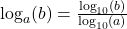
 Incorrect
We are asked to find:
Shortcut Method:
Write both numbers as powers of 10:
So the expression becomes:
Use change of base formula:Unattempted
We are asked to find:
Shortcut Method:
Write both numbers as powers of 10:
So the expression becomes:
Use change of base formula: -
Question 10 of 120
10. Question
1 pointsCategory: Polycet MathematicsThe roots of x2+x-6=0 are
Correct
We are given the quadratic equation:

Shortcut Method: Splitting the middle term
We need two numbers that multiply to -6and add to +1(coefficient of x):
Numbers: 3 and -2
So we factor:
x2 + 3x – 2x – 6 = 0
x(x + 3) -2(x + 3) = 0
(x – 2)(x + 3) = 0
Roots are: x = 2, -3Incorrect
We are given the quadratic equation:
Shortcut Method: Splitting the middle term
We need two numbers that multiply to -6and add to +1(coefficient of x):
Numbers: 3 and -2
So we factor:
x2 + 3x – 2x – 6 = 0
x(x + 3) -2(x + 3) = 0
(x – 2)(x + 3) = 0
Roots are: x = 2, -3Unattempted
We are given the quadratic equation:
Shortcut Method: Splitting the middle term
We need two numbers that multiply to -6and add to +1(coefficient of x):
Numbers: 3 and -2
So we factor:
x2 + 3x – 2x – 6 = 0
x(x + 3) -2(x + 3) = 0
(x – 2)(x + 3) = 0
Roots are: x = 2, -3 -
Question 11 of 120
11. Question
1 pointsCategory: Polycet MathematicsIf α,β are the roots of a quadratic equation ax2+bx+c=0, a≠0 then
 = ……..
A)
B)
C)
D) Correct
We are given that α and β are roots of the quadratic equation:
ax2 + bx + c = 0, a ≠ 0
We need to find the value of:
Shortcut Trick:
From the standard formulas for a quadratic:

So,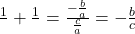
Final Answer:
Want a similar shortcut for ?Incorrect
We are given that α and β are roots of the quadratic equation:
ax2 + bx + c = 0, a ≠ 0
We need to find the value of:
Shortcut Trick:
From the standard formulas for a quadratic:
So,
Final Answer:
Want a similar shortcut for?Unattempted
We are given that α and β are roots of the quadratic equation:
ax2 + bx + c = 0, a ≠ 0
We need to find the value of:
Shortcut Trick:
From the standard formulas for a quadratic:
So,
Final Answer:
Want a similar shortcut for? -
Question 12 of 120
12. Question
1 pointsCategory: Polycet Mathematics10th term of an arithmetic progression 2,-1,-4,…… is
Correct
We are given the arithmetic progression:
2,-1,-4,…
Step 1: Identify first term and common difference
First term a = 2
Common difference d = -1 – 2 = -3
Step 2: Use formula for nth term of AP:
Tn = a + (n-1)d
For the 10th term:
TT10 = 2 + (10-1)(-3) = 2 + 9(-3) = 2 – 27 = -25Incorrect
We are given the arithmetic progression:
2,-1,-4,…
Step 1: Identify first term and common difference
First term a = 2
Common difference d = -1 – 2 = -3
Step 2: Use formula for nth term of AP:
Tn = a + (n-1)d
For the 10th term:
TT10 = 2 + (10-1)(-3) = 2 + 9(-3) = 2 – 27 = -25Unattempted
We are given the arithmetic progression:
2,-1,-4,…
Step 1: Identify first term and common difference
First term a = 2
Common difference d = -1 – 2 = -3
Step 2: Use formula for nth term of AP:
Tn = a + (n-1)d
For the 10th term:
TT10 = 2 + (10-1)(-3) = 2 + 9(-3) = 2 – 27 = -25 -
Question 13 of 120
13. Question
1 pointsCategory: Polycet MathematicsHow many two digit numbers are divisible by 7?
Correct
To find how many two-digit numbers are divisible by 7, follow this shortcut method:
Step 1: Two-digit numbers range from 10 to 99.
Step 2: Find the first two-digit number divisible by 7:
Step 3: Find the last two-digit number divisible by 7:
Step 4: Use AP count formula: Incorrect
To find how many two-digit numbers are divisible by 7, follow this shortcut method:
Step 1: Two-digit numbers range from 10 to 99.
Step 2: Find the first two-digit number divisible by 7:
Step 3: Find the last two-digit number divisible by 7:
Step 4: Use AP count formula:Unattempted
To find how many two-digit numbers are divisible by 7, follow this shortcut method:
Step 1: Two-digit numbers range from 10 to 99.
Step 2: Find the first two-digit number divisible by 7:
Step 3: Find the last two-digit number divisible by 7:
Step 4: Use AP count formula: -
Question 14 of 120
14. Question
1 pointsCategory: Polycet MathematicsThe sum of 15 terms of A.P. 3, 6, 9……
Correct
We are given an A.P.:3, 6, 9, …
This is a common A.P. where:
First term Common difference d = 6 – 3 = 3
Number of terms n = 15
Use shortcut formula for sum of n terms of A.P.:![S_n = \frac{n}{2} [2a + (n - 1)d]](https://www.mcqbits.com/wp-content/ql-cache/quicklatex.com-e0fb4107dda6a7ff499609f7e788ed18_l3.png "Rendered by QuickLaTeX.com")
Plug in values:![S_{15} = \frac{15}{2} [2(3) + (15 - 1)(3)] = \frac{15}{2} [6 + 42] = \frac{15}{2} × 48 = 15 × 24 = 360](https://www.mcqbits.com/wp-content/ql-cache/quicklatex.com-c66646ffb006b16a0302bded15947b16_l3.png "Rendered by QuickLaTeX.com") Incorrect
Incorrect
We are given an A.P.:3, 6, 9, …
This is a common A.P. where:
First termCommon difference d = 6 – 3 = 3
Number of terms n = 15
Use shortcut formula for sum of n terms of A.P.:
Plug in values:Unattempted
We are given an A.P.:3, 6, 9, …
This is a common A.P. where:
First termCommon difference d = 6 – 3 = 3
Number of terms n = 15
Use shortcut formula for sum of n terms of A.P.:
Plug in values: -
Question 15 of 120
15. Question
1 pointsCategory: Polycet MathematicsThe value of x which satisfies the equation 2x-(4-x)=5-x is
Correct
Solve:
2x – (4 – x) = 5 – x
Simplify LHS:
2x – 4 + x = 5 – x ⇒ 3x – 4 = 5 – x
Bring all terms to one side:
3x + x = 5 + 4 ⇒ 4x = 9 ⇒ x = = 2.25Incorrect
Solve:
2x – (4 – x) = 5 – x
Simplify LHS:
2x – 4 + x = 5 – x ⇒ 3x – 4 = 5 – x
Bring all terms to one side:
3x + x = 5 + 4 ⇒ 4x = 9 ⇒ x == 2.25Unattempted
Solve:
2x – (4 – x) = 5 – x
Simplify LHS:
2x – 4 + x = 5 – x ⇒ 3x – 4 = 5 – x
Bring all terms to one side:
3x + x = 5 + 4 ⇒ 4x = 9 ⇒ x == 2.25 -
Question 16 of 120
16. Question
1 pointsCategory: Polycet MathematicsSolution of the equations 3x-4y=7 and 2x+3y=-1 is not equal to ……
A)
B)
C)
D) Correct
Eliminate incorrect solution:
You are given equations:
⇒1. 3x – 4y = 7
⇒2. 2x + 3y = -1
Now test the options by substituting values.
⇒A.
1st:
So, this is incorrect.
Correct Answer:
(does notsatisfy the equations)Incorrect
Eliminate incorrect solution:
You are given equations:
⇒1. 3x – 4y = 7
⇒2. 2x + 3y = -1
Now test the options by substituting values.
⇒A.
1st:
So, this is incorrect.
Correct Answer:
(does notsatisfy the equations)Unattempted
Eliminate incorrect solution:
You are given equations:
⇒1. 3x – 4y = 7
⇒2. 2x + 3y = -1
Now test the options by substituting values.
⇒A.
1st:
So, this is incorrect.
Correct Answer:
(does notsatisfy the equations) -
Question 17 of 120
17. Question
1 pointsCategory: Polycet MathematicsIf Σn = 45, then n= ……
Correct
If Σn = 45, then n = ?
We assume this means the sum of first n natural numbers:
Try n = 9:
9 × 10 = 90Incorrect
If Σn = 45, then n = ?
We assume this means the sum of first n natural numbers:
Try n = 9:
9 × 10 = 90Unattempted
If Σn = 45, then n = ?
We assume this means the sum of first n natural numbers:
Try n = 9:
9 × 10 = 90 -
Question 18 of 120
18. Question
1 pointsCategory: Polycet MathematicsThe centre of a circle with (1, 2) and (7,-4) as end points of the diameter is
Correct
Midpoint of diameter endpoints (1, 2) and (7, -4)
Use midpoint formula:
Correct Answer: (4, -1)Incorrect
Midpoint of diameter endpoints (1, 2) and (7, -4)
Use midpoint formula:
Correct Answer: (4, -1)Unattempted
Midpoint of diameter endpoints (1, 2) and (7, -4)
Use midpoint formula:
Correct Answer: (4, -1) -
Question 19 of 120
19. Question
1 pointsCategory: Polycet MathematicsArea of a triangle formed by the line xcosα+ysinα=p with the coordinate axes
A)
B)
C)
D) Correct
Area of triangle formed by line with axes
Equation: xcosα + ysinα = p
Find x- and y-intercepts:
Put y = 0:
Put x = 0:
Area of triangle =
Correct Answer: Incorrect
Area of triangle formed by line with axes
Equation: xcosα + ysinα = p
Find x- and y-intercepts:
Put y = 0:
Put x = 0:
Area of triangle =
Correct Answer:Unattempted
Area of triangle formed by line with axes
Equation: xcosα + ysinα = p
Find x- and y-intercepts:
Put y = 0:
Put x = 0:
Area of triangle =
Correct Answer: -
Question 20 of 120
20. Question
1 pointsCategory: Polycet MathematicsIf x+7y=7 and 7x-3y=-3, then y =
Correct
Solve:
1) } x + 7y = 7
2) } 7x – 3y = -3
From (1):x = 7 – 7y
Substitute into (2):
7(7 – 7y) – 3y = -3
49 – 49y – 3y = -3 ⇒ -52y = -52 ⇒ y = 1Incorrect
Solve:
1) } x + 7y = 7
2) } 7x – 3y = -3
From (1):x = 7 – 7y
Substitute into (2):
7(7 – 7y) – 3y = -3
49 – 49y – 3y = -3 ⇒ -52y = -52 ⇒ y = 1Unattempted
Solve:
1) } x + 7y = 7
2) } 7x – 3y = -3
From (1):x = 7 – 7y
Substitute into (2):
7(7 – 7y) – 3y = -3
49 – 49y – 3y = -3 ⇒ -52y = -52 ⇒ y = 1 -
Question 21 of 120
21. Question
1 pointsCategory: Polycet MathematicsWhich of the following equation is not a linear equation
Correct
Which of the following equations is not a linear equation?
(2 + 3x = y – 5) → Linear(Degree 1)
(3 – x = y2 + 7) → Not linear(Degree 2 in (y))
(x + 3y = 2y – x) → Linear(Degree 1)
(5x + 2y = 0) → Linear(Degree 1)Incorrect
Which of the following equations is not a linear equation?
(2 + 3x = y – 5) → Linear(Degree 1)
(3 – x = y2 + 7) → Not linear(Degree 2 in (y))
(x + 3y = 2y – x) → Linear(Degree 1)
(5x + 2y = 0) → Linear(Degree 1)Unattempted
Which of the following equations is not a linear equation?
(2 + 3x = y – 5) → Linear(Degree 1)
(3 – x = y2 + 7) → Not linear(Degree 2 in (y))
(x + 3y = 2y – x) → Linear(Degree 1)
(5x + 2y = 0) → Linear(Degree 1) -
Question 22 of 120
22. Question
1 pointsCategory: Polycet MathematicsIf x2+kx+1=0 has a root x=1 then k =
Correct
If (x2 + kx + 1 = 0) has a root (x = 1), then (k = ?)
Substitute (x = 1):
12 + k(1) + 1 = 0 ⇒ 1 + k + 1 = 0 ⇒ k = -2Incorrect
If (x2 + kx + 1 = 0) has a root (x = 1), then (k = ?)
Substitute (x = 1):
12 + k(1) + 1 = 0 ⇒ 1 + k + 1 = 0 ⇒ k = -2Unattempted
If (x2 + kx + 1 = 0) has a root (x = 1), then (k = ?)
Substitute (x = 1):
12 + k(1) + 1 = 0 ⇒ 1 + k + 1 = 0 ⇒ k = -2 -
Question 23 of 120
23. Question
1 pointsCategory: Polycet MathematicsIf the roots of the quadratic equation ax2 + bx+c=0 are sinα and cosα, then
 = …….
= …….
A)
B)
C)a2
D)b2Correct
If the roots of (ax^2 + bx + c = 0) are (sin α) and (cos α), then (1 + 2
 = ?)
= ?)
Given roots: (sin α + cos α = – ) and (sin α cos α = $\frac{c}{a}).
Using the identity:
sin2 α + cos2 α = 1 ⇒ (sin α + cos α)2 – 2 sin α cos α = 1
Substitute:
\[ \left(-\frac{b}{a}\right)^2 – 2\left(\frac{c}{a}\right) = 1 ⇒ \frac{b^2}{a^2} – \frac{2c}{a} = 1 \]Rearrange:
\[ 1 + 2\frac{c}{a} = \frac{b^2}{a^2} \]Incorrect
If the roots of (ax^2 + bx + c = 0) are (sin α) and (cos α), then (1 + 2
= ?)
Given roots: (sin α + cos α = –) and (sin α cos α = $\frac{c}{a}).
Using the identity:
sin2 α + cos2 α = 1 ⇒ (sin α + cos α)2 – 2 sin α cos α = 1
Substitute:
\[ \left(-\frac{b}{a}\right)^2 – 2\left(\frac{c}{a}\right) = 1 ⇒ \frac{b^2}{a^2} – \frac{2c}{a} = 1 \]Rearrange:
\[ 1 + 2\frac{c}{a} = \frac{b^2}{a^2} \]Unattempted
If the roots of (ax^2 + bx + c = 0) are (sin α) and (cos α), then (1 + 2
= ?)
Given roots: (sin α + cos α = –) and (sin α cos α = $\frac{c}{a}).
Using the identity:
sin2 α + cos2 α = 1 ⇒ (sin α + cos α)2 – 2 sin α cos α = 1
Substitute:
\[ \left(-\frac{b}{a}\right)^2 – 2\left(\frac{c}{a}\right) = 1 ⇒ \frac{b^2}{a^2} – \frac{2c}{a} = 1 \]Rearrange:
\[ 1 + 2\frac{c}{a} = \frac{b^2}{a^2} \] -
Question 24 of 120
24. Question
1 pointsCategory: Polycet MathematicsIf the system of equation 3x-2y-7=0 and kx+2y+11=0 has unique solution then …….
Correct
If the system (3x – 2y – 7 = 0) and (kx + 2y + 11 = 0) has a unique solution, then:
For a unique solution, the lines must not be parallel:
\[ \frac{a_1}{a_2} ≠q \frac{b_1}{b_2} ⇒ \frac{3}{k} ≠q \frac{-2}{2} ⇒ \frac{3}{k} ≠q -1 ⇒ k ≠q -3 \]Incorrect
If the system (3x – 2y – 7 = 0) and (kx + 2y + 11 = 0) has a unique solution, then:
For a unique solution, the lines must not be parallel:
\[ \frac{a_1}{a_2} ≠q \frac{b_1}{b_2} ⇒ \frac{3}{k} ≠q \frac{-2}{2} ⇒ \frac{3}{k} ≠q -1 ⇒ k ≠q -3 \]Unattempted
If the system (3x – 2y – 7 = 0) and (kx + 2y + 11 = 0) has a unique solution, then:
For a unique solution, the lines must not be parallel:
\[ \frac{a_1}{a_2} ≠q \frac{b_1}{b_2} ⇒ \frac{3}{k} ≠q \frac{-2}{2} ⇒ \frac{3}{k} ≠q -1 ⇒ k ≠q -3 \] -
Question 25 of 120
25. Question
1 pointsCategory: Polycet MathematicsIf 7x-5y=2 and 3x+y=4, then x=
Correct
If (7x – 5y = 2) and (3x + y = 4), then (x = ?)
From the second equation: (y = 4 – 3x).
Substitute into the first equation:
7x – 5(4 – 3x) = 2
⇒ 7x – 20 + 15x = 2
⇒ 22x = 22
⇒ x = 1Incorrect
If (7x – 5y = 2) and (3x + y = 4), then (x = ?)
From the second equation: (y = 4 – 3x).
Substitute into the first equation:
7x – 5(4 – 3x) = 2
⇒ 7x – 20 + 15x = 2
⇒ 22x = 22
⇒ x = 1Unattempted
If (7x – 5y = 2) and (3x + y = 4), then (x = ?)
From the second equation: (y = 4 – 3x).
Substitute into the first equation:
7x – 5(4 – 3x) = 2
⇒ 7x – 20 + 15x = 2
⇒ 22x = 22
⇒ x = 1 -
Question 26 of 120
26. Question
1 pointsCategory: Polycet MathematicsThe distance between the points (0, 0) and (5,12) is
Correct
Distance between (0, 0) and (5, 12) is:
\[ \sqrt{(5-0)^2 + (12-0)^2} = \sqrt{25 + 144} = \sqrt{169} = 13 \]Incorrect
Distance between (0, 0) and (5, 12) is:
\[ \sqrt{(5-0)^2 + (12-0)^2} = \sqrt{25 + 144} = \sqrt{169} = 13 \]Unattempted
Distance between (0, 0) and (5, 12) is:
\[ \sqrt{(5-0)^2 + (12-0)^2} = \sqrt{25 + 144} = \sqrt{169} = 13 \] -
Question 27 of 120
27. Question
1 pointsCategory: Polycet MathematicsIf the slope of the line through (x,5) and (5,2) is 3, then the value of x is
Correct
Slope of the line through (x, 5) and (5, 2) is 3. Find (x):
\[ \text{Slope} = \frac{2 – 5}{5 – x} = 3 ⇒ \frac{-3}{5 – x} = 3 ⇒ -3 = 15 – 3x ⇒ x = 6 \]Incorrect
Slope of the line through (x, 5) and (5, 2) is 3. Find (x):
\[ \text{Slope} = \frac{2 – 5}{5 – x} = 3 ⇒ \frac{-3}{5 – x} = 3 ⇒ -3 = 15 – 3x ⇒ x = 6 \]Unattempted
Slope of the line through (x, 5) and (5, 2) is 3. Find (x):
\[ \text{Slope} = \frac{2 – 5}{5 – x} = 3 ⇒ \frac{-3}{5 – x} = 3 ⇒ -3 = 15 – 3x ⇒ x = 6 \] -
Question 28 of 120
28. Question
1 pointsCategory: Polycet MathematicsIf △ABC~△PQR, ∠A=32°, ∠R=65° then ∠B=
Correct
If (ΔABC ~ ΔPQR), (∠A = 32°), (∠R = 65°), then (∠B = ?)
Corresponding angles are equal, so (∠C = ∠R = 65°).
Sum of angles in (ΔABC):
∠B = 180° – ∠A – ∠C = 180° – 32° – 65° = 83°Incorrect
If (ΔABC ~ ΔPQR), (∠A = 32°), (∠R = 65°), then (∠B = ?)
Corresponding angles are equal, so (∠C = ∠R = 65°).
Sum of angles in (ΔABC):
∠B = 180° – ∠A – ∠C = 180° – 32° – 65° = 83°Unattempted
If (ΔABC ~ ΔPQR), (∠A = 32°), (∠R = 65°), then (∠B = ?)
Corresponding angles are equal, so (∠C = ∠R = 65°).
Sum of angles in (ΔABC):
∠B = 180° – ∠A – ∠C = 180° – 32° – 65° = 83° -
Question 29 of 120
29. Question
1 pointsCategory: Polycet MathematicsThe angle in the minor segment is
Correct
The angle in the minor segment is:
An angle in the minor segment is obtuse(greater than (90°).Incorrect
The angle in the minor segment is:
An angle in the minor segment is obtuse(greater than (90°).Unattempted
The angle in the minor segment is:
An angle in the minor segment is obtuse(greater than (90°). -
Question 30 of 120
30. Question
1 pointsCategory: Polycet MathematicsIn the figure ∠BAO=30°, ∠BCO=40° then ∠AOC=
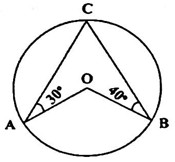 Correct
In the figure, (∠BAO = 30°), (∠BCO = 40°). Then (∠AOC = ?)
From the figure (assuming (O) is the center of the circle):
– (∠AOC = 2(∠ABC) (Central angle theorem).
– (∠ABC = ∠BAO + ∠BCO = 30° + 40° = 70°).
– Thus, (∠AOC = 2 × 70° = 140°).Incorrect
In the figure, (∠BAO = 30°), (∠BCO = 40°). Then (∠AOC = ?)
From the figure (assuming (O) is the center of the circle):
– (∠AOC = 2(∠ABC) (Central angle theorem).
– (∠ABC = ∠BAO + ∠BCO = 30° + 40° = 70°).
– Thus, (∠AOC = 2 × 70° = 140°).Unattempted
In the figure, (∠BAO = 30°), (∠BCO = 40°). Then (∠AOC = ?)
From the figure (assuming (O) is the center of the circle):
– (∠AOC = 2(∠ABC) (Central angle theorem).
– (∠ABC = ∠BAO + ∠BCO = 30° + 40° = 70°).
– Thus, (∠AOC = 2 × 70° = 140°). -
Question 31 of 120
31. Question
1 pointsCategory: Polycet MathematicsIn the figure OB=13cm, OP⊥AB, OP=12cm then AB=
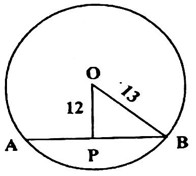 Correct
Given OB = 13 cm, OP ⊥ AB, OP = 12 cm. Find AB.
In right triangle OPB:
OB2 = OP2 + PB2 ⇒ 132 = 122 + PB2 ⇒ 169 = 144 + PB2 ⇒ PB = 5
Since OP ⊥ AB and lies at midpoint, AB = 2 × PB = 2 × 5 = 10 cmIncorrect
Given OB = 13 cm, OP ⊥ AB, OP = 12 cm. Find AB.
In right triangle OPB:
OB2 = OP2 + PB2 ⇒ 132 = 122 + PB2 ⇒ 169 = 144 + PB2 ⇒ PB = 5
Since OP ⊥ AB and lies at midpoint, AB = 2 × PB = 2 × 5 = 10 cmUnattempted
Given OB = 13 cm, OP ⊥ AB, OP = 12 cm. Find AB.
In right triangle OPB:
OB2 = OP2 + PB2 ⇒ 132 = 122 + PB2 ⇒ 169 = 144 + PB2 ⇒ PB = 5
Since OP ⊥ AB and lies at midpoint, AB = 2 × PB = 2 × 5 = 10 cm -
Question 32 of 120
32. Question
1 pointsCategory: Polycet MathematicsIn the △ABC; D, E and F are the mid points of the sides BC, CA and Ab. The are of △DEF: area of △ABC = ……
Correct
D, E, F are midpoints of triangle ABC. Then triangle DEF is the midpoint triangle.
Area of triangle formed by joining midpoints is one-fourthof original triangle:
Correct Answer: 1:4Incorrect
D, E, F are midpoints of triangle ABC. Then triangle DEF is the midpoint triangle.
Area of triangle formed by joining midpoints is one-fourthof original triangle:
Correct Answer: 1:4Unattempted
D, E, F are midpoints of triangle ABC. Then triangle DEF is the midpoint triangle.
Area of triangle formed by joining midpoints is one-fourthof original triangle:
Correct Answer: 1:4 -
Question 33 of 120
33. Question
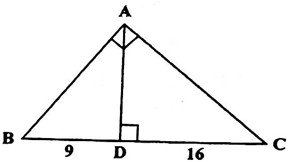
1 pointsCategory: Polycet MathematicsIn the given figure ∠BAC=90°, AD⊥BC, BD=9cm and CD=16cm then AC=
 Correct
∠BAC = 90°, AD ⊥ BC, BD = 9 cm, CD = 16 cm → AC = ?
This is a right triangle with altitude from right angle to hypotenuse:
Use Pythagorean relation:
In right triangle with perpendicular from right angle, AB² = BD × BC
Correct Answer: 20 cmIncorrect
∠BAC = 90°, AD ⊥ BC, BD = 9 cm, CD = 16 cm → AC = ?
This is a right triangle with altitude from right angle to hypotenuse:
Use Pythagorean relation:
In right triangle with perpendicular from right angle, AB² = BD × BC
Correct Answer: 20 cmUnattempted
∠BAC = 90°, AD ⊥ BC, BD = 9 cm, CD = 16 cm → AC = ?
This is a right triangle with altitude from right angle to hypotenuse:
Use Pythagorean relation:
In right triangle with perpendicular from right angle, AB² = BD × BC
Correct Answer: 20 cm -
Question 34 of 120
34. Question
1 pointsCategory: Polycet MathematicsThe base of two similar triangles are 24 cm and 18 cm. If one side of the first triangle is 8 cm then corresponding side of other triangle is
Correct
Similar triangles: base ratio = 24:18 = 4:3
So corresponding sides are in same ratio:
Correct Answer: 6 cmIncorrect
Similar triangles: base ratio = 24:18 = 4:3
So corresponding sides are in same ratio:
Correct Answer: 6 cmUnattempted
Similar triangles: base ratio = 24:18 = 4:3
So corresponding sides are in same ratio:
Correct Answer: 6 cm -
Question 35 of 120
35. Question
1 pointsCategory: Polycet MathematicsIf a parallelogram is cyclic, then it is a ……..
Correct
A cyclic parallelogram has all angles = 90°, because opposite angles in a cyclic quadrilateral are supplementary.
Only parallelogram with all 90° angles is a rectangle.
Correct Answer: A. RectangleIncorrect
A cyclic parallelogram has all angles = 90°, because opposite angles in a cyclic quadrilateral are supplementary.
Only parallelogram with all 90° angles is a rectangle.
Correct Answer: A. RectangleUnattempted
A cyclic parallelogram has all angles = 90°, because opposite angles in a cyclic quadrilateral are supplementary.
Only parallelogram with all 90° angles is a rectangle.
Correct Answer: A. Rectangle -
Question 36 of 120
36. Question
1 pointsCategory: Polycet MathematicsThe perimeter of a rhombus is 52 cm, if its one diagonal is 24 cm then the length of its other diagonal is
Correct
Perimeter of rhombus = 52 → side = 52/4 = 13 cm
One diagonal = 24 cm → use Pythagoras to find the other:
Correct Answer: 10 cmIncorrect
Perimeter of rhombus = 52 → side = 52/4 = 13 cm
One diagonal = 24 cm → use Pythagoras to find the other:
Correct Answer: 10 cmUnattempted
Perimeter of rhombus = 52 → side = 52/4 = 13 cm
One diagonal = 24 cm → use Pythagoras to find the other:
Correct Answer: 10 cm -
Question 37 of 120
37. Question
1 pointsCategory: Polycet MathematicsThe radius of a cone is 7 m and its height is 10 m. then its slant height is …….
Correct
Cone radius r = 7 m, height h = 10 m → slant height = √(r² + h²)

Correct Answer: 12.2 mIncorrect
Cone radius r = 7 m, height h = 10 m → slant height = √(r² + h²)
Correct Answer: 12.2 mUnattempted
Cone radius r = 7 m, height h = 10 m → slant height = √(r² + h²)
Correct Answer: 12.2 m -
Question 38 of 120
38. Question
1 pointsCategory: Polycet MathematicsIf tanθ=cotθ then the value of secθ= ……
A)
B)
C)√2
D)1Correct
If
 , then
Then,
Correct Answer: √2Incorrect
If
, then
Then,
Correct Answer: √2Unattempted
If
, then
Then,
Correct Answer: √2 -
Question 39 of 120
39. Question
1 pointsCategory: Polycet MathematicsThe angle at tangent to a circle and the radius drawn at the point of contact is
Correct
Angle between tangent and radius at point of contact is always
Correct Answer: 90°Incorrect
Angle between tangent and radius at point of contact is always
Correct Answer: 90°Unattempted
Angle between tangent and radius at point of contact is always
Correct Answer: 90° -
Question 40 of 120
40. Question
1 pointsCategory: Polycet MathematicsThe ratio of volumes of two cones is 4:5 and the ratio of the radii of their bases is 2:3
Correct
Volume of cone =

Given:
Let height be .
.
Correct Answer: 9:5
Let me know if you'd like a visual explanation for any geometry question.
Let's solve Questions 41 to 50step by step:Incorrect
Volume of cone =
Given:
Let height be.
Correct Answer: 9:5
Let me know if you'd like a visual explanation for any geometry question.
Let's solve Questions 41 to 50step by step:Unattempted
Volume of cone =
Given:
Let height be.
Correct Answer: 9:5
Let me know if you'd like a visual explanation for any geometry question.
Let's solve Questions 41 to 50step by step: -
Question 41 of 120
41. Question
1 pointsCategory: Polycet MathematicsThree cubes of sides 6 cm, 8 cm and 1 cm are melted to form a new cube then the length of the edge of the new cube is
Correct
Three cubes with sides 6 cm, 8 cm, and 1 cm are melted to form a new cube.
Volume of cube = a3Total volume:
= 63 + 83 + 13
= 216 + 512 + 1
= 729 cm3
New cube's edge:![= \sqrt[3]{729} = 9 \, \text{cm}](https://www.mcqbits.com/wp-content/ql-cache/quicklatex.com-68543e373dc4dd5d72d7a068a1f352ad_l3.png "Rendered by QuickLaTeX.com")
Correct Answer: 9 cmIncorrect
Three cubes with sides 6 cm, 8 cm, and 1 cm are melted to form a new cube.
Volume of cube = a3Total volume:
= 63 + 83 + 13
= 216 + 512 + 1
= 729 cm3
New cube's edge:
Correct Answer: 9 cmUnattempted
Three cubes with sides 6 cm, 8 cm, and 1 cm are melted to form a new cube.
Volume of cube = a3Total volume:
= 63 + 83 + 13
= 216 + 512 + 1
= 729 cm3
New cube's edge:
Correct Answer: 9 cm -
Question 42 of 120
42. Question
1 pointsCategory: Polycet MathematicsIf A+B=90° and cot B=
 then the value of tan A= …..Correct
If A + B = 90° and
 , find
Since A = 90° – B,
Then
Correct Answer: Incorrect
If A + B = 90° and
, find
Since A = 90° – B,
Then
Correct Answer:Unattempted
If A + B = 90° and
, find
Since A = 90° – B,
Then
Correct Answer: -
Question 43 of 120
43. Question
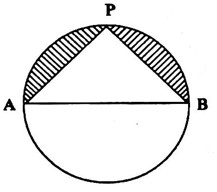
1 pointsCategory: Polycet MathematicsIn the figure, AP=12cm,PB=16cm. Let π=3, then the perimeter of the shaded portion is
 Correct
Incorrect
Unattempted
-
Question 44 of 120
44. Question
1 pointsCategory: Polycet MathematicsIf the diameter of a sphere is 'd' then its volume is
A)
B)
C)
D) Correct
Diameter = d → radius = d/2
Volume of sphere:
Correct Answer: Incorrect
Diameter = d → radius = d/2
Volume of sphere:
Correct Answer:Unattempted
Diameter = d → radius = d/2
Volume of sphere:
Correct Answer: -
Question 45 of 120
45. Question
1 pointsCategory: Polycet MathematicsA reservoir is in the shape of frustum of right circular cone. It is 8 m across at the top and 4 m cross at the bottom. It is 6 m deep then its capacity is
Correct
Volume of a frustum:

Given:
Top radius R = 4, bottom radius r = 2, height h = 6, π = 3.14
Closest option:
Correct Answer: 170 m³Incorrect
Volume of a frustum:
Given:
Top radius R = 4, bottom radius r = 2, height h = 6, π = 3.14
Closest option:
Correct Answer: 170 m³Unattempted
Volume of a frustum:
Given:
Top radius R = 4, bottom radius r = 2, height h = 6, π = 3.14
Closest option:
Correct Answer: 170 m³ -
Question 46 of 120
46. Question
1 pointsCategory: Polycet MathematicsA dice is thrown twice. Then the probability of that '5' will come up at least once
Correct
Dice is thrown twice. Probability of getting at least one '5'
Total outcomes = 36
Probability of not getting 5in a single throw = 5/6
So, probability of not getting 5 at allin two throws:
Correct Answer: Incorrect
Dice is thrown twice. Probability of getting at least one '5'
Total outcomes = 36
Probability of not getting 5in a single throw = 5/6
So, probability of not getting 5 at allin two throws:
Correct Answer:Unattempted
Dice is thrown twice. Probability of getting at least one '5'
Total outcomes = 36
Probability of not getting 5in a single throw = 5/6
So, probability of not getting 5 at allin two throws:
Correct Answer: -
Question 47 of 120
47. Question
1 pointsCategory: Polycet MathematicsIf the mean of 6, 7, x, 8, y, 14 is 9 then x+y= …..
Correct
Mean of 6, 7, x, 8, y, 14 = 9
Total sum = 6 + 7 + x + 8 + y + 14 = 35 + x + y
Correct Answer: 19Incorrect
Mean of 6, 7, x, 8, y, 14 = 9
Total sum = 6 + 7 + x + 8 + y + 14 = 35 + x + y
Correct Answer: 19Unattempted
Mean of 6, 7, x, 8, y, 14 = 9
Total sum = 6 + 7 + x + 8 + y + 14 = 35 + x + y
Correct Answer: 19 -
Question 48 of 120
48. Question
1 pointsCategory: Polycet MathematicsFrom the figure, θ=,
 Correct
From the figure, if opposite side is √3 and adjacent side is 1, then

Correct Answer: 60°Incorrect
From the figure, if opposite side is √3 and adjacent side is 1, then
Correct Answer: 60°Unattempted
From the figure, if opposite side is √3 and adjacent side is 1, then
Correct Answer: 60° -
Question 49 of 120
49. Question
1 pointsCategory: Polycet MathematicsThe top of two poles are of height 20 m and 14 m are connected by a wire. If the wire makes an angle 30° with the horizontal, then the length of the wire is
Correct
Two poles 20 m and 14 m → vertical difference = 6 m
Wire makes 30° with ground:
Correct Answer: 12 mIncorrect
Two poles 20 m and 14 m → vertical difference = 6 m
Wire makes 30° with ground:
Correct Answer: 12 mUnattempted
Two poles 20 m and 14 m → vertical difference = 6 m
Wire makes 30° with ground:
Correct Answer: 12 m -
Question 50 of 120
50. Question
1 pointsCategory: Polycet MathematicsIf three coins are tossed simultaneously, then the probability of getting at least two heads is
Correct
Three coins tossed → total outcomes = 8
Favorable outcomes for at least 2 heads:
HHTHTHTHHHHH → 4 outcomes
Correct Answer:Incorrect
Three coins tossed → total outcomes = 8
Favorable outcomes for at least 2 heads:
HHTHTHTHHHHH → 4 outcomes
Correct Answer:Unattempted
Three coins tossed → total outcomes = 8
Favorable outcomes for at least 2 heads:
HHTHTHTHHHHH → 4 outcomes
Correct Answer: -
Question 51 of 120
51. Question
1 pointsCategory: Polycet MathematicsThe A.M. of 30 students is 42. Among them, two students got zero marks. Then A.M. of the remaining students is
Correct
A.M. of 30 students is 42
⇒ Total marks = 30 × 42 = 1260
2 students got zero ⇒ remaining 28 students got 1260 – 0 – 0 = 1260
New A.M. = 1260 / 28 = 45Answer: B. 45Incorrect
A.M. of 30 students is 42
⇒ Total marks = 30 × 42 = 1260
2 students got zero ⇒ remaining 28 students got 1260 – 0 – 0 = 1260
New A.M. = 1260 / 28 = 45Answer: B. 45Unattempted
A.M. of 30 students is 42
⇒ Total marks = 30 × 42 = 1260
2 students got zero ⇒ remaining 28 students got 1260 – 0 – 0 = 1260
New A.M. = 1260 / 28 = 45Answer: B. 45 -
Question 52 of 120
52. Question
1 pointsCategory: Polycet MathematicsThe median of 17, 31, 12, 27, 15, 19, 23 is
Correct
Data: 17, 31, 12, 27, 15, 19, 23
Sorted: 12, 15, 17, 19, 23, 27, 31 → Median is the middle = 19Incorrect
Data: 17, 31, 12, 27, 15, 19, 23
Sorted: 12, 15, 17, 19, 23, 27, 31 → Median is the middle = 19Unattempted
Data: 17, 31, 12, 27, 15, 19, 23
Sorted: 12, 15, 17, 19, 23, 27, 31 → Median is the middle = 19 -
Question 53 of 120
53. Question
1 pointsCategory: Polycet MathematicsMode of A, B, C, D ….. Z is
Correct
Mode = Most frequent value
A to Z are all distinct letters
⇒ No repetition
⇒ No mode
Answer: No modeIncorrect
Mode = Most frequent value
A to Z are all distinct letters
⇒ No repetition
⇒ No mode
Answer: No modeUnattempted
Mode = Most frequent value
A to Z are all distinct letters
⇒ No repetition
⇒ No mode
Answer: No mode -
Question 54 of 120
54. Question
1 pointsCategory: Polycet MathematicsThe value of sinθ or cosθ never exceeds
Correct
Incorrect
Unattempted
-
Question 55 of 120
55. Question
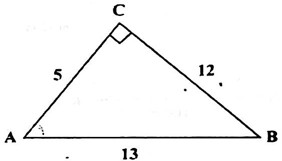
1 pointsCategory: Polycet MathematicsIn the figure, the value of cosec A is
 Correct
From the figure: triangle with sides 5, 12, 13 → right-angled at B
cosec A = hypotenuse / opposite = 13 / 12
Answer: Incorrect
From the figure: triangle with sides 5, 12, 13 → right-angled at B
cosec A = hypotenuse / opposite = 13 / 12
Answer:Unattempted
From the figure: triangle with sides 5, 12, 13 → right-angled at B
cosec A = hypotenuse / opposite = 13 / 12
Answer: -
Question 56 of 120
56. Question
1 pointsCategory: Polycet MathematicsIf a two digit number is choosen at random then the probability that number choosen is a multiple of 3
Correct
Two-digit numbers: 10 to 99 → Total = 90
Multiples of 3 in this range = from 12 to 99 = 12, 15, …, 99
This is an AP with a = 12, d = 3
Use formula: nth term = a + (n-1)d
99 = 12 + (n-1)×3 ⇒ n = 30
Probability = 30 / 90 = 1/3
Answer: Incorrect
Two-digit numbers: 10 to 99 → Total = 90
Multiples of 3 in this range = from 12 to 99 = 12, 15, …, 99
This is an AP with a = 12, d = 3
Use formula: nth term = a + (n-1)d
99 = 12 + (n-1)×3 ⇒ n = 30
Probability = 30 / 90 = 1/3
Answer:Unattempted
Two-digit numbers: 10 to 99 → Total = 90
Multiples of 3 in this range = from 12 to 99 = 12, 15, …, 99
This is an AP with a = 12, d = 3
Use formula: nth term = a + (n-1)d
99 = 12 + (n-1)×3 ⇒ n = 30
Probability = 30 / 90 = 1/3
Answer: -
Question 57 of 120
57. Question
1 pointsCategory: Polycet Mathematicsp(x)+P(“not x”)=
Correct
P(x) + P(not x) = 1 (law of total probability)
Incorrect
P(x) + P(not x) = 1 (law of total probability)
Unattempted
P(x) + P(not x) = 1 (law of total probability)
-
Question 58 of 120
58. Question
1 pointsCategory: Polycet MathematicsIf cotθ=
 then
then  =
=
A)
B)
C)
D) Correct
Given cotθ = b/a ⇒ cosθ = a/√(a² + b²), sinθ = b/√(a² + b²)
Then,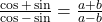
Answer: Incorrect
Given cotθ = b/a ⇒ cosθ = a/√(a² + b²), sinθ = b/√(a² + b²)
Then,
Answer:Unattempted
Given cotθ = b/a ⇒ cosθ = a/√(a² + b²), sinθ = b/√(a² + b²)
Then,
Answer: -
Question 59 of 120
59. Question
1 pointsCategory: Polycet MathematicsThe angle of elevation of the top of a tower, whose height is 100 m, at a pint whose distance from the base of the tower is 100 m is
Correct
Height = 100 m, Distance = 100 m
Right triangle ⇒ tan θ = 100/100 = 1 ⇒ θ = 45°Incorrect
Height = 100 m, Distance = 100 m
Right triangle ⇒ tan θ = 100/100 = 1 ⇒ θ = 45°Unattempted
Height = 100 m, Distance = 100 m
Right triangle ⇒ tan θ = 100/100 = 1 ⇒ θ = 45° -
Question 60 of 120
60. Question
1 pointsCategory: Polycet MathematicsThe value of
 = …….Correct
Incorrect
Unattempted
-
Question 61 of 120
61. Question
1 pointsCategory: Polycet PhysicsTo find normal to curved surface at a point, join that point and
Correct
Normal to a curved surface at a point is drawn by joining that point to the centre of curvature (C).
Incorrect
Normal to a curved surface at a point is drawn by joining that point to the centre of curvature (C).
Unattempted
Normal to a curved surface at a point is drawn by joining that point to the centre of curvature (C).
-
Question 62 of 120
62. Question
1 pointsCategory: Polycet PhysicsWhen a set of parallel rays of light inclined at 15° to the principal axis, are incident on a convex lens, they
Correct
Parallel rays inclined at 15° converge to a point on the focal plane, not directly at F.
Answer: Converge to a point on focal planeIncorrect
Parallel rays inclined at 15° converge to a point on the focal plane, not directly at F.
Answer: Converge to a point on focal planeUnattempted
Parallel rays inclined at 15° converge to a point on the focal plane, not directly at F.
Answer: Converge to a point on focal plane -
Question 63 of 120
63. Question
1 pointsCategory: Polycet PhysicsFocal plane of a spherical mirror is
Correct
Focal plane is perpendicular to the principal axis at the focus.
Answer: Plane perpendicular to the principal axis at focus (F)Incorrect
Focal plane is perpendicular to the principal axis at the focus.
Answer: Plane perpendicular to the principal axis at focus (F)Unattempted
Focal plane is perpendicular to the principal axis at the focus.
Answer: Plane perpendicular to the principal axis at focus (F) -
Question 64 of 120
64. Question
1 pointsCategory: Polycet PhysicsDentist uses this mirror to examine teeth of patients
Correct
Dentists use concave mirrorsto get a magnified, erect image.
Answer: Concave mirrorIncorrect
Dentists use concave mirrorsto get a magnified, erect image.
Answer: Concave mirrorUnattempted
Dentists use concave mirrorsto get a magnified, erect image.
Answer: Concave mirror -
Question 65 of 120
65. Question
1 pointsCategory: Polycet PhysicsIf object and image lie on the same side of a mirror, the mirror is
Correct
If both object and image are on same side, it must be a concave mirrorforming a real or magnified virtual image.
Answer: ConcaveIncorrect
If both object and image are on same side, it must be a concave mirrorforming a real or magnified virtual image.
Answer: ConcaveUnattempted
If both object and image are on same side, it must be a concave mirrorforming a real or magnified virtual image.
Answer: Concave -
Question 66 of 120
66. Question
1 pointsCategory: Polycet PhysicsWhen distance between object and screen s more than 4 times the focal length, in many positions of the convex lens, images is sharp
Correct
If the object–screen distance is more than 4f, a convex lens can produce a sharp image in twopositions (lens formula).
Answer: 2Incorrect
If the object–screen distance is more than 4f, a convex lens can produce a sharp image in twopositions (lens formula).
Answer: 2Unattempted
If the object–screen distance is more than 4f, a convex lens can produce a sharp image in twopositions (lens formula).
Answer: 2 -
Question 67 of 120
67. Question
1 pointsCategory: Polycet PhysicsIf a light ray passing through centre of curvature C. of a mirror is incident on the mirror, the reflected ray's path is [b, c]
Correct
A ray passing through Cstrikes the mirror perpendicularly and retraces its path.
Answer: Retraces the path And Through centre of curvature C.Incorrect
A ray passing through Cstrikes the mirror perpendicularly and retraces its path.
Answer: Retraces the path And Through centre of curvature C.Unattempted
A ray passing through Cstrikes the mirror perpendicularly and retraces its path.
Answer: Retraces the path And Through centre of curvature C. -
Question 68 of 120
68. Question
1 pointsCategory: Polycet PhysicsIf magnification is equal to one, it means
Correct
Magnification = 1 ⇒ Image size = Object size
Answer: Image is of the same size as that of objectIncorrect
Magnification = 1 ⇒ Image size = Object size
Answer: Image is of the same size as that of objectUnattempted
Magnification = 1 ⇒ Image size = Object size
Answer: Image is of the same size as that of object -
Question 69 of 120
69. Question
1 pointsCategory: Polycet PhysicsAn object is placed at a certain distance on the principal axis of a concave mirror. If the image distance (v) is 30 cm and radius of curvature (R) of the mirror is 20 cm, find the object distance (u)
Correct
Use mirror formula:


Answer: 15 cmIncorrect
Use mirror formula:
Answer: 15 cmUnattempted
Use mirror formula:
Answer: 15 cm -
Question 70 of 120
70. Question
1 pointsCategory: Polycet PhysicsWhich part of our eye is responsible for image formation
Correct
Image formation happens on the retina, but among options, the crystalline lensfocuses light on the retina.
Answer: Crystalline lensIncorrect
Image formation happens on the retina, but among options, the crystalline lensfocuses light on the retina.
Answer: Crystalline lensUnattempted
Image formation happens on the retina, but among options, the crystalline lensfocuses light on the retina.
Answer: Crystalline lens -
Question 71 of 120
71. Question
1 pointsCategory: Polycet PhysicsObject distance (u), image distance (v), focal length (f) are all measured form
Correct
optic centre (P)
(In optics, object distance (u), image distance (v), and focal length (f) are all measured from the optic centre (P) of the lens/mirror.)Incorrect
optic centre (P)
(In optics, object distance (u), image distance (v), and focal length (f) are all measured from the optic centre (P) of the lens/mirror.)Unattempted
optic centre (P)
(In optics, object distance (u), image distance (v), and focal length (f) are all measured from the optic centre (P) of the lens/mirror.) -
Question 72 of 120
72. Question
1 pointsCategory: Polycet PhysicsIn our eye cones identify.
Correct
colour
(Cones in the human eye are responsible for color vision, while rods detect light intensity.)Incorrect
colour
(Cones in the human eye are responsible for color vision, while rods detect light intensity.)Unattempted
colour
(Cones in the human eye are responsible for color vision, while rods detect light intensity.) -
Question 73 of 120
73. Question
1 pointsCategory: Polycet PhysicsWith the help of …….eye-lens changes its focal length
Correct
Ciliary muscle
(The ciliary muscles help adjust the curvature of the eye-lens, changing its focal length for accommodation.)Incorrect
Ciliary muscle
(The ciliary muscles help adjust the curvature of the eye-lens, changing its focal length for accommodation.)Unattempted
Ciliary muscle
(The ciliary muscles help adjust the curvature of the eye-lens, changing its focal length for accommodation.) -
Question 74 of 120
74. Question
1 pointsCategory: Polycet PhysicsA bird is flying down vertically towards the surface of water with constant speed. A fish in the water vertically below the bird sees the bird
Correct
Further away than actual distance
(Due to refraction at the water-air interface, the bird appears higher (farther away) than its actual position to the fish.)Incorrect
Further away than actual distance
(Due to refraction at the water-air interface, the bird appears higher (farther away) than its actual position to the fish.)Unattempted
Further away than actual distance
(Due to refraction at the water-air interface, the bird appears higher (farther away) than its actual position to the fish.) -
Question 75 of 120
75. Question
1 pointsCategory: Polycet PhysicsFocal length of Plano-convex lens of refractive index n and radius of curvature R is
A)f=R
B)
C)
D) Correct
( f =
 )
)
(The focal length of a plano-convex lens with refractive index ( n ) and radius of curvature ( R ) is given by ( f =).) Incorrect
( f =
)
(The focal length of a plano-convex lens with refractive index ( n ) and radius of curvature ( R ) is given by ( f =).) Unattempted
( f =
)
(The focal length of a plano-convex lens with refractive index ( n ) and radius of curvature ( R ) is given by ( f =).) -
Question 76 of 120
76. Question
1 pointsCategory: Polycet PhysicsA convex lens from image of an object at infinity. Object is at
Correct
focus (F)
(For a convex lens, an object at infinity forms an image at the focal point (F).)Incorrect
focus (F)
(For a convex lens, an object at infinity forms an image at the focal point (F).)Unattempted
focus (F)
(For a convex lens, an object at infinity forms an image at the focal point (F).) -
Question 77 of 120
77. Question
1 pointsCategory: Polycet Physics4Ω, 8Ω, R resistors are connected in series. Resultant resistance is 20Ω. Then R=
Correct
8Ω
(In series, resistances add up: ( 4Ω + 8Ω + R = 20Ω ) → ( R = 8Ω ).)Incorrect
8Ω
(In series, resistances add up: ( 4Ω + 8Ω + R = 20Ω ) → ( R = 8Ω ).)Unattempted
8Ω
(In series, resistances add up: ( 4Ω + 8Ω + R = 20Ω ) → ( R = 8Ω ).) -
Question 78 of 120
78. Question
1 pointsCategory: Polycet PhysicsWhen how much current flows in the fuse, it melts
Correct
20 A
(A typical fuse melts when the current exceeds its rated value, often around 20 A for household applications.)Incorrect
20 A
(A typical fuse melts when the current exceeds its rated value, often around 20 A for household applications.)Unattempted
20 A
(A typical fuse melts when the current exceeds its rated value, often around 20 A for household applications.) -
Question 79 of 120
79. Question
1 pointsCategory: Polycet PhysicsThe alloy made of Cu, Mn, Ni is
Correct
Manganin
(Manganin is an alloy made of copper (Cu), manganese (Mn), and nickel (Ni), known for its stable resistance.)Incorrect
Manganin
(Manganin is an alloy made of copper (Cu), manganese (Mn), and nickel (Ni), known for its stable resistance.)Unattempted
Manganin
(Manganin is an alloy made of copper (Cu), manganese (Mn), and nickel (Ni), known for its stable resistance.) -
Question 80 of 120
80. Question
1 pointsCategory: Polycet PhysicsConductivity=
Correct
Conductivity = D. Resistivity-1
(Conductivity (σ) is the reciprocal of resistivity (ρ), i.e., ( ).) Incorrect
Conductivity = D. Resistivity-1
(Conductivity (σ) is the reciprocal of resistivity (ρ), i.e., ().) Unattempted
Conductivity = D. Resistivity-1
(Conductivity (σ) is the reciprocal of resistivity (ρ), i.e., ().) -
Question 81 of 120
81. Question
1 pointsCategory: Polycet PhysicsLeast distance of distinct vision is ……
Correct
Least distance of distinct vision is …… 25 cm
(The least distance of distinct vision for a normal human eye is about 25 cm, the closest distance at which an object can be seen clearly.)Incorrect
Least distance of distinct vision is …… 25 cm
(The least distance of distinct vision for a normal human eye is about 25 cm, the closest distance at which an object can be seen clearly.)Unattempted
Least distance of distinct vision is …… 25 cm
(The least distance of distinct vision for a normal human eye is about 25 cm, the closest distance at which an object can be seen clearly.) -
Question 82 of 120
82. Question
1 pointsCategory: Polycet PhysicsThe resistance of human body varies between
Correct
Human body resistance varies widely depending on conditions: 100Ω to 500,000Ω
Answer: 100Ω to 5,00,000ΩIncorrect
Human body resistance varies widely depending on conditions: 100Ω to 500,000Ω
Answer: 100Ω to 5,00,000ΩUnattempted
Human body resistance varies widely depending on conditions: 100Ω to 500,000Ω
Answer: 100Ω to 5,00,000Ω -
Question 83 of 120
83. Question
1 pointsCategory: Polycet PhysicsFocal length of a lens is 25 cm. Its power is …….
Correct
Focal length of a lens is 25 cm. Its power is ……. 4D
(Power of a lens (P) is given by ( P = ) (in meters). Here, ( f = 0.25 m ), so ( P =
  = 4 D ).) Incorrect
Focal length of a lens is 25 cm. Its power is ……. 4D
(Power of a lens (P) is given by ( P = ) (in meters). Here, ( f = 0.25 m ), so ( P = = 4 D ).) Unattempted
Focal length of a lens is 25 cm. Its power is ……. 4D
(Power of a lens (P) is given by ( P = ) (in meters). Here, ( f = 0.25 m ), so ( P = = 4 D ).) -
Question 84 of 120
84. Question
1 pointsCategory: Polycet PhysicsWhen a person is suffering from both Myopia and Hypermetropia, which should be used
Correct
When a person is suffering from both Myopia and Hypermetropia, which should be used?
Bi-focal lens
(A bi-focal lens has two parts: the upper part corrects myopia (short-sightedness), and the lower part corrects hypermetropia (long-sightedness).)Incorrect
When a person is suffering from both Myopia and Hypermetropia, which should be used?
Bi-focal lens
(A bi-focal lens has two parts: the upper part corrects myopia (short-sightedness), and the lower part corrects hypermetropia (long-sightedness).)Unattempted
When a person is suffering from both Myopia and Hypermetropia, which should be used?
Bi-focal lens
(A bi-focal lens has two parts: the upper part corrects myopia (short-sightedness), and the lower part corrects hypermetropia (long-sightedness).) -
Question 85 of 120
85. Question
1 pointsCategory: Polycet PhysicsThe current in a conductor is directly proportional to the potential difference between its end. This is called ……
Correct
The current in a conductor is directly proportional to the potential difference between its ends. This is called …… Ohm's law
(Ohm's law states ( V = IR ), meaning current (I) is directly proportional to voltage (V) for a constant resistance (R).)Incorrect
The current in a conductor is directly proportional to the potential difference between its ends. This is called …… Ohm's law
(Ohm's law states ( V = IR ), meaning current (I) is directly proportional to voltage (V) for a constant resistance (R).)Unattempted
The current in a conductor is directly proportional to the potential difference between its ends. This is called …… Ohm's law
(Ohm's law states ( V = IR ), meaning current (I) is directly proportional to voltage (V) for a constant resistance (R).) -
Question 86 of 120
86. Question
1 pointsCategory: Polycet PhysicsWhen a copper wire is connected to a battery the electric field in the wire is
Correct
When a copper wire is connected to a battery, the electric field in the wire is
uniform in the wire
(In a uniform conductor like copper, the electric field is constant (uniform) along the wire when connected to a steady voltage source.)Incorrect
When a copper wire is connected to a battery, the electric field in the wire is
uniform in the wire
(In a uniform conductor like copper, the electric field is constant (uniform) along the wire when connected to a steady voltage source.)Unattempted
When a copper wire is connected to a battery, the electric field in the wire is
uniform in the wire
(In a uniform conductor like copper, the electric field is constant (uniform) along the wire when connected to a steady voltage source.) -
Question 87 of 120
87. Question
1 pointsCategory: Polycet PhysicsUnits for specific resistance ….
Correct
Units for specific resistance ….
Ωm
(Specific resistance (resistivity) has units of ohm-meter (Ωm).)Incorrect
Units for specific resistance ….
Ωm
(Specific resistance (resistivity) has units of ohm-meter (Ωm).)Unattempted
Units for specific resistance ….
Ωm
(Specific resistance (resistivity) has units of ohm-meter (Ωm).) -
Question 88 of 120
88. Question
1 pointsCategory: Polycet Physics = which quantityCorrect
(
 ) = which quantity?
Potential
(Electric potential (V) is defined as work done per unit charge, and since work = force × distance, ( V = ).) Incorrect
(
) = which quantity?
Potential
(Electric potential (V) is defined as work done per unit charge, and since work = force × distance, ( V = ).) Unattempted
(
) = which quantity?
Potential
(Electric potential (V) is defined as work done per unit charge, and since work = force × distance, ( V = ).) -
Question 89 of 120
89. Question
1 pointsCategory: Polycet PhysicsA current through a conductor is 2A. When there is a potential difference of 10V between its ends. Its resistance is
Correct
A current through a conductor is 2A. When there is a potential difference of 10V between its ends, its resistance is
5Ω
(Using Ohm's law, ( R =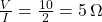 ).) Incorrect
A current through a conductor is 2A. When there is a potential difference of 10V between its ends, its resistance is
5Ω
(Using Ohm's law, ( R =).) Unattempted
A current through a conductor is 2A. When there is a potential difference of 10V between its ends, its resistance is
5Ω
(Using Ohm's law, ( R =).) -
Question 90 of 120
90. Question
1 pointsCategory: Polycet PhysicsFormula used when a light ray enters a medium of refractive index n2 from a medium of refractive index at curved surface with radius n1 of curvature R is
A)
B)
C)
D)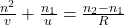 Correct
(
 )
)
(This is the formula for refraction at a curved spherical surface separating two media with refractive indices ( n1 ) and ( n1 ).)Incorrect
(
)
(This is the formula for refraction at a curved spherical surface separating two media with refractive indices ( n1 ) and ( n1 ).)Unattempted
(
)
(This is the formula for refraction at a curved spherical surface separating two media with refractive indices ( n1 ) and ( n1 ).) -
Question 91 of 120
91. Question
1 pointsCategory: Polycet ChemistryIn an atom, when electron jump from ground state excited state
Correct
When an electron jumps from ground to excited state, it absorbs energy.
Answer: Energy is absorbedIncorrect
When an electron jumps from ground to excited state, it absorbs energy.
Answer: Energy is absorbedUnattempted
When an electron jumps from ground to excited state, it absorbs energy.
Answer: Energy is absorbed -
Question 92 of 120
92. Question
1 pointsCategory: Polycet ChemistryThe orbital which is filled with electrons immediately after '3p' is
Correct
After 3p, the next orbital filled (according to the Aufbau principle) is 4s.
Answer: 4sIncorrect
After 3p, the next orbital filled (according to the Aufbau principle) is 4s.
Answer: 4sUnattempted
After 3p, the next orbital filled (according to the Aufbau principle) is 4s.
Answer: 4s -
Question 93 of 120
93. Question
1 pointsCategory: Polycet ChemistryWhen n = 4, the total number of subshells in an orbit is
Correct
For n = 4, the number of subshells = n⇒ 4 subshells: 4s, 4p, 4d, 4f
Answer: 4Incorrect
For n = 4, the number of subshells = n⇒ 4 subshells: 4s, 4p, 4d, 4f
Answer: 4Unattempted
For n = 4, the number of subshells = n⇒ 4 subshells: 4s, 4p, 4d, 4f
Answer: 4 -
Question 94 of 120
94. Question
1 pointsCategory: Polycet ChemistryWhich of the following has larger wavelength in electromagnetic spectrum
Correct
In EM spectrum, radio waveshave the longest wavelength.
Answer: Radio wavesIncorrect
In EM spectrum, radio waveshave the longest wavelength.
Answer: Radio wavesUnattempted
In EM spectrum, radio waveshave the longest wavelength.
Answer: Radio waves -
Question 95 of 120
95. Question
1 pointsCategory: Polycet ChemistryThe quantum number which explains about the special orientation of orbitals is
Correct
Magnetic quantum number (m₁)explains orientationof orbitals in space.
Answer: m₁Incorrect
Magnetic quantum number (m₁)explains orientationof orbitals in space.
Answer: m₁Unattempted
Magnetic quantum number (m₁)explains orientationof orbitals in space.
Answer: m₁ -
Question 96 of 120
96. Question
1 pointsCategory: Polycet ChemistryThe correct set of four quantum number values for the valence electron of sodium atom is
Correct
Sodium's valence electron: atomic number 11 → electron in 3s¹ ⇒n = 3, l = 0, m = 0, s = +½
Answer: n=3, l=0, m=0, s=+½Incorrect
Sodium's valence electron: atomic number 11 → electron in 3s¹ ⇒n = 3, l = 0, m = 0, s = +½
Answer: n=3, l=0, m=0, s=+½Unattempted
Sodium's valence electron: atomic number 11 → electron in 3s¹ ⇒n = 3, l = 0, m = 0, s = +½
Answer: n=3, l=0, m=0, s=+½ -
Question 97 of 120
97. Question
1 pointsCategory: Polycet ChemistryThe impurities present in the ore is called as
Correct
Impurities in ore = gangue
Answer: GangueIncorrect
Impurities in ore = gangue
Answer: GangueUnattempted
Impurities in ore = gangue
Answer: Gangue -
Question 98 of 120
98. Question
1 pointsCategory: Polycet ChemistryWhich of the following is used as a flux in the smelting of Haematite
Correct
In smelting haematite, CaCO₃acts as a fluxto remove SiO₂.
Answer: CaCO₃Incorrect
In smelting haematite, CaCO₃acts as a fluxto remove SiO₂.
Answer: CaCO₃Unattempted
In smelting haematite, CaCO₃acts as a fluxto remove SiO₂.
Answer: CaCO₃ -
Question 99 of 120
99. Question
1 pointsCategory: Polycet ChemistryPotassium and Calcium belongs to
Correct
Potassium (K) and Calcium (Ca) are in Group 1 and 2 respectively → s-block
Answer: s-block elementsIncorrect
Potassium (K) and Calcium (Ca) are in Group 1 and 2 respectively → s-block
Answer: s-block elementsUnattempted
Potassium (K) and Calcium (Ca) are in Group 1 and 2 respectively → s-block
Answer: s-block elements -
Question 100 of 120
100. Question
1 pointsCategory: Polycet ChemistryWhich of the following is an ore of Iron
Correct
Haematite (Fe₂O₃)is an important ore of iron.
Answer: HaematiteIncorrect
Haematite (Fe₂O₃)is an important ore of iron.
Answer: HaematiteUnattempted
Haematite (Fe₂O₃)is an important ore of iron.
Answer: Haematite -
Question 101 of 120
101. Question
1 pointsCategory: Polycet ChemistryIn electrolytic refining of metals, the pure metal is taken as
Correct
In electrolytic refining, pure metalis deposited on the cathode.
Answer: CathodeIncorrect
In electrolytic refining, pure metalis deposited on the cathode.
Answer: CathodeUnattempted
In electrolytic refining, pure metalis deposited on the cathode.
Answer: Cathode -
Question 102 of 120
102. Question
1 pointsCategory: Polycet ChemistryThe reaction that takes place in Thermite process is
Correct
Thermite processinvolves reductionof metal oxides (e.g., Fe₂O₃) using aluminum.
Answer: ReductionIncorrect
Thermite processinvolves reductionof metal oxides (e.g., Fe₂O₃) using aluminum.
Answer: ReductionUnattempted
Thermite processinvolves reductionof metal oxides (e.g., Fe₂O₃) using aluminum.
Answer: Reduction -
Question 103 of 120
103. Question
1 pointsCategory: Polycet ChemistryWhat does the symbol 'A' represent in a chemical equation
Correct
Symbol Δ(A) in a chemical equation indicates heating.
Answer: HeatingIncorrect
Symbol Δ(A) in a chemical equation indicates heating.
Answer: HeatingUnattempted
Symbol Δ(A) in a chemical equation indicates heating.
Answer: Heating -
Question 104 of 120
104. Question
1 pointsCategory: Polycet ChemistryThe product formed when quick lime reacts with water is
Correct
Quick lime = CaO, reacts with water to form Ca(OH)₂ (slaked lime).
Answer: Ca(OH)₂Incorrect
Quick lime = CaO, reacts with water to form Ca(OH)₂ (slaked lime).
Answer: Ca(OH)₂Unattempted
Quick lime = CaO, reacts with water to form Ca(OH)₂ (slaked lime).
Answer: Ca(OH)₂ -
Question 105 of 120
105. Question
1 pointsCategory: Polycet ChemistryWhich one of the following is not a product in the electrolysis of aqueous NaCl
Correct
Electrolysis of aqueous NaCl gives NaOH, Cl₂, H₂. Not O₂.
Answer: O₂Incorrect
Electrolysis of aqueous NaCl gives NaOH, Cl₂, H₂. Not O₂.
Answer: O₂Unattempted
Electrolysis of aqueous NaCl gives NaOH, Cl₂, H₂. Not O₂.
Answer: O₂ -
Question 106 of 120
106. Question
1 pointsCategory: Polycet ChemistryWhich of the following has highest mass
Correct
One mole of H₂Ohas highest mass (≈18g).
Answer: One mole H₂OIncorrect
One mole of H₂Ohas highest mass (≈18g).
Answer: One mole H₂OUnattempted
One mole of H₂Ohas highest mass (≈18g).
Answer: One mole H₂O -
Question 107 of 120
107. Question
1 pointsCategory: Polycet ChemistryWhen the equation, Na + H2O → NaOH + H2 is balanced. What is the coefficient for 'Na'
Correct
Balanced equation:
2Na + 2H₂O → 2NaOH + H₂↑
Coefficient of Na = 2
Answer: 2Incorrect
Balanced equation:
2Na + 2H₂O → 2NaOH + H₂↑
Coefficient of Na = 2
Answer: 2Unattempted
Balanced equation:
2Na + 2H₂O → 2NaOH + H₂↑
Coefficient of Na = 2
Answer: 2 -
Question 108 of 120
108. Question
1 pointsCategory: Polycet ChemistryThe chemical reaction in which heat is absorbed is called
Correct
Reactions absorbing heatare endothermic.
Answer: Endothermic reactionIncorrect
Reactions absorbing heatare endothermic.
Answer: Endothermic reactionUnattempted
Reactions absorbing heatare endothermic.
Answer: Endothermic reaction -
Question 109 of 120
109. Question
1 pointsCategory: Polycet ChemistryWhich of the following is not an inert gas element
Correct
Na (Sodium)is notan inert gas (it's an alkali metal).
Answer: NaIncorrect
Na (Sodium)is notan inert gas (it's an alkali metal).
Answer: NaUnattempted
Na (Sodium)is notan inert gas (it's an alkali metal).
Answer: Na -
Question 110 of 120
110. Question
1 pointsCategory: Polycet ChemistryHow many s-block and p-block elements are there in the second period of the modern periodic table
Correct
In 2nd period:
s-block: 2 elements (Li, Be)p-block: 6 elements (B to Ne)
Answer: 2, 6Incorrect
In 2nd period:
s-block: 2 elements (Li, Be)p-block: 6 elements (B to Ne)
Answer: 2, 6Unattempted
In 2nd period:
s-block: 2 elements (Li, Be)p-block: 6 elements (B to Ne)
Answer: 2, 6 -
Question 111 of 120
111. Question
1 pointsCategory: Polycet ChemistryWhich of the following atomic numbers of elements have similar chemical properties
Correct
Elements with similar chemical properties belong to the same group.9 (F), 17 (Cl), 35 (Br)→ Halogens(Group 17)
Answer: 9, 17, 35Incorrect
Elements with similar chemical properties belong to the same group.9 (F), 17 (Cl), 35 (Br)→ Halogens(Group 17)
Answer: 9, 17, 35Unattempted
Elements with similar chemical properties belong to the same group.9 (F), 17 (Cl), 35 (Br)→ Halogens(Group 17)
Answer: 9, 17, 35 -
Question 112 of 120
112. Question
1 pointsCategory: Polycet ChemistryIn the modern periodic table group 2 (IIA) elements are called as
Correct
Group 2 (IIA) elements like Be, Mg, Caare called alkaline earth metals.
Answer: Alkaline earth metalsIncorrect
Group 2 (IIA) elements like Be, Mg, Caare called alkaline earth metals.
Answer: Alkaline earth metalsUnattempted
Group 2 (IIA) elements like Be, Mg, Caare called alkaline earth metals.
Answer: Alkaline earth metals -
Question 113 of 120
113. Question
1 pointsCategory: Polycet ChemistryThe valency of calcium is
Correct
Calcium (Ca) has atomic number 20 and electronic configuration: 2, 8, 8, 2 → valency = 2
Answer: 2Incorrect
Calcium (Ca) has atomic number 20 and electronic configuration: 2, 8, 8, 2 → valency = 2
Answer: 2Unattempted
Calcium (Ca) has atomic number 20 and electronic configuration: 2, 8, 8, 2 → valency = 2
Answer: 2 -
Question 114 of 120
114. Question
1 pointsCategory: Polycet ChemistryAtomic number of an element is 17. then the period to which this element belongs
Correct
Element with atomic number 17 is Cl, and it is in 3rd period.
Answer: 3Incorrect
Element with atomic number 17 is Cl, and it is in 3rd period.
Answer: 3Unattempted
Element with atomic number 17 is Cl, and it is in 3rd period.
Answer: 3 -
Question 115 of 120
115. Question
1 pointsCategory: Polycet ChemistryWhich one of the following is strong acid
Correct
HClis a strong acid, while CH₃COOH is weak, NH₄OH is weak base.
Answer: HClIncorrect
HClis a strong acid, while CH₃COOH is weak, NH₄OH is weak base.
Answer: HClUnattempted
HClis a strong acid, while CH₃COOH is weak, NH₄OH is weak base.
Answer: HCl -
Question 116 of 120
116. Question
1 pointsCategory: Polycet ChemistryWhich one of the following is an acidic oxide
Correct
CO₂forms carbonic acid in water → it is an acidic oxide.
Answer: CO₂Incorrect
CO₂forms carbonic acid in water → it is an acidic oxide.
Answer: CO₂Unattempted
CO₂forms carbonic acid in water → it is an acidic oxide.
Answer: CO₂ -
Question 117 of 120
117. Question
1 pointsCategory: Polycet ChemistryMetallic oxides are generally …… in nature
Correct
Metallic oxideslike Na₂O, CaO, MgO are generally basic.
Answer: BasicIncorrect
Metallic oxideslike Na₂O, CaO, MgO are generally basic.
Answer: BasicUnattempted
Metallic oxideslike Na₂O, CaO, MgO are generally basic.
Answer: Basic -
Question 118 of 120
118. Question
1 pointsCategory: Polycet ChemistryThe nature of chemical in antacid is
Correct
Antacidsneutralize excess acid → they are basicin nature.
Answer: BasicIncorrect
Antacidsneutralize excess acid → they are basicin nature.
Answer: BasicUnattempted
Antacidsneutralize excess acid → they are basicin nature.
Answer: Basic -
Question 119 of 120
119. Question
1 pointsCategory: Polycet ChemistrypH value of aqueous NaCl solution is
Correct
NaClis a neutral salt → aqueous solution has pH = 7
Answer: 7Incorrect
NaClis a neutral salt → aqueous solution has pH = 7
Answer: 7Unattempted
NaClis a neutral salt → aqueous solution has pH = 7
Answer: 7 -
Question 120 of 120
120. Question
1 pointsCategory: Polycet ChemistryThe chemical formula of blue coloured Copper Sulphate crystal is,
Correct
Blue copper sulphatecrystals = CuSO₄·5H₂O(pentahydrate)
Answer: CuSO₄·5H₂OIncorrect
Blue copper sulphatecrystals = CuSO₄·5H₂O(pentahydrate)
Answer: CuSO₄·5H₂OUnattempted
Blue copper sulphatecrystals = CuSO₄·5H₂O(pentahydrate)
Answer: CuSO₄·5H₂O
AP Polycet(polytechnic) EXAM PATTERN AND SYLLABUS:
1) The examination (POLYCET) will be of 2 Hrs 30 Minutes duration consisting of only one
paper as per the syllabus in the subjects of Mathematics, Physics, Chemistry & Biology
of X Class (S.S.C.) Examination held in Academic Year 2020-2021 as prescribed by the
Board of Secondary Education, Telangana State.
2) The POLYCET Examination will be conducted for 150 marks in
Mathematics (60 marks) +
Physics (30 Marks) +
Chemistry (30 Marks) +
Biology (30 Marks).
3) The Duration of Examination is 2 ½ hours.
4) The candidates who are willing to take admission in to Agricultural & Veterinary Diploma
Courses offered by PJTSAU & PVNRTVU attempt Biology Questions.
5) The Question Paper Pattern will be:
| Subjects | No. of Questions | Marks |
| Physics | 30 | 30 |
| Chemistry | 30 | 30 |
| Mathematics | 60 | 60 |
| Biology | 30 | 30 |
| Total | 150 | 150 |
No negative marks for wrong answers.
AP Polycet SYLLABUS FOR COMMON ENTRANCE TEST:
The Syllabus of Mathematics, Physics, Chemistry and Biology for POLYCET-2021 is the same as that of SSC Examination for the A.Y 2020-21 conducted by the Board of Secondary Education, Telangana.
Syllabus of Mathematics:
- Real Numbers
- Number System
- Sets
- Polynomials
- Algebra
- Progressions
- Quadratic Equations
- Linear Equations
- Geometry
- Coordinate Geometry
- Surface Areas & Volume
- Trigonometry
- Mensuration
- Probability
- Statistics
- Mathematical Modeling
Syllabus of Physics:
- A structure of Atom
- Chemical Bonding
- Carbon & its Compounds
- Heat
- Classification of Elements
- Magnetic Effects of Electric Current
- Chemical Equations & Reactions
- Acids, Bases & Salts
- Refraction of Light at Plane Surface
- Refraction of Light at Curved Surface
- Human Eye & Colorful World
- Electricity
- Metallurgy
- Reflection of Light
Syllabus of Chemistry:
- The States of Matter
- Surface Chemistry
- Electrochemistry
- Redox Reactions
- Polymers
- Nuclear Chemistry
- Chemical and Ionic Equilibrium
- Phase equilibrium & Solutions
- Chemical Thermodynamics
- Basic Concepts in Organic Chemistry and Stereochemistry
- Organic compounds with the functional group containing nitrogen
- Chemical Kinetics
- Atomic Structure
- Chemistry in everyday life
- Urea and malonic ester
- Qualitative and quantitative analysis and purification of organic compounds
- Preparation, Properties, and Reactions of Alkanes, Alkenes, Alkynes
- Organic compounds with the functional group containing oxygen
- Reactions of Benzene and heterocyclic compounds
- Organic compounds with the functional group containing halogens
- Biomolecules – Carbohydrates, Protein, Vitamins, Nucleic Acid, Lipids, Hormones Reactions of a, b unsaturated carbonyl and acids
- Spectroscopy measurements including IR, UV, NMR (proton and carbon 13)
- Environmental Chemistry, etc.
Syllabus of Biology:
1. Nutrition
2. Respiration
3. Transportation
4. Excretion
5. Coordination
6. Reproduction
7. Coordination in life process
8. Heredity
9. Our environment
10. Natural resources
1. As POLYCET tests are separately being conducted by the State of Telangana and Andhra Pradesh, the candidates of Telangana intending to take admission in the courses offered in State wide institutions of Andhra Pradesh State, in the ratio of 42:36:22 in AU/OU/SVU regions, or desirous of seeking admission under 15% ‘unreserved’ quota offered in Andhra Pradesh State, shall appear for POLYCET-2021 conducted by the State of Andhra Pradesh.
2. The seats in various Diploma courses of PJTSAU will be filled up by PJTSAU based on the ranks obtained in the POLYCET 2021. The University will give separate counseling and admission notifications. The interested candidates need to apply for the Diploma courses offered by PJTSAU.
3. The seats in various Diploma courses of PVNRTVU will be filled up by PVNRTVU based on the ranks obtained in the POLYCET 2021. The University will give separate counseling and admission notifications. The interested candidates need to apply for the Diploma courses offered by PVNRTVU.
4. 6 years integrated (2+4) undergraduate (B.Tech.) courses offered by Rajiv Gandhi University of Knowledge Technologies (RGUKT), Basar, Nirmal Dist, Telangana for AY-2022-23.
Leaderboard: Polycet Mock Test 9 - 2021 TS
| Pos. | Name | Entered on | Points | Result |
|---|---|---|---|---|
| Table is loading | ||||
| No data available | ||||