
131) 1 mL of ”x volume”  solution on heating gives 20 mL of oxygen gas at STP. The (w/v) % corresponding to ”x volume” of is
solution on heating gives 20 mL of oxygen gas at STP. The (w/v) % corresponding to ”x volume” of isView Answer
B) 6.06
Explanation:The decomposition reaction is
 .
.According to the stoichiometry, 2 moles of
( g) produce 22400 mL of
  at STP.
The problem states that 1 mL of the solution gives 20 mL of
at STP.Therefore, the volume strength of the
solution is 20 volumes.Mass of
required to produce 22400 mL of is 68 g.Mass of
required to produce 20 mL of is  g.
g.This calculated mass is the amount of
present in 1 mL of the solution.To find the (w/v) %, we calculate the mass of
in 100 mL of the solution. .
.Simplifying the expression:
 .
.This value corresponds closely to 6.06.
132) Identify the correct statements from the following
I. LiF is less soluble in water than NaF
II. Both LiCl and MgCl₂ are insoluble in ethanol
III. Both Li and Mg form nitrides
IV. Na₂CO₃ gives CO₂ on heating
I. LiF is less soluble in water than NaF
II. Both LiCl and MgCl₂ are insoluble in ethanol
III. Both Li and Mg form nitrides
IV. Na₂CO₃ gives CO₂ on heating
133) The major ingredient (51%) in Portland cement is
134) Boron trifluoride on reaction with lithium aluminium hydride in ether gives LiF, AlF₃ and X. X on reaction with NH₃ gives Y. Y on further heating gives a compound Z. The number of σ-bonds and π-bonds in Z are x and y respectively. (x+y) is equal to
View Answer
A) 15
Explanation:Identification of X:
Boron trifluoride (
 ) reacts with lithium aluminium hydride (
 ) in diethyl ether to produce Diborane (
 ).
).
Therefore, Compound X is Diborane (
).Identification of Y and Z:
Diborane reacts with excess Ammonia (
 ) at low temperatures to form an ionic adduct, Borohydride-ammonia complex.
![B_2H_6 + 2NH_3 \rightarrow [BH_2(NH_3)_2]^+[BH_4]^-](https://www.mcqbits.com/wp-content/ql-cache/quicklatex.com-07242d7dfcbd49ca72acd47bcd70e78f_l3.png "Rendered by QuickLaTeX.com")
Therefore, Compound Y is
![[BH_2(NH_3)_2][BH_4]](https://www.mcqbits.com/wp-content/ql-cache/quicklatex.com-ca63a2776442ba3fbdcb107d16533d08_l3.png "Rendered by QuickLaTeX.com") .
.On further heating this adduct to about 200°C, it decomposes to form Borazine (
 ), also known as “Inorganic Benzene”.
![3[BH_2(NH_3)_2][BH_4] \xrightarrow{\Delta} 2B_3N_3H_6 + 12H_2](https://www.mcqbits.com/wp-content/ql-cache/quicklatex.com-3175c31e7c9fae9aa4521587caef724c_l3.png "Rendered by QuickLaTeX.com")
Therefore, Compound Z is Borazine (
).Calculation of σ and π bonds in Z (Borazine):
Borazine has a hexagonal ring structure with alternating Boron (B) and Nitrogen (N) atoms.
– Each B atom is bonded to one H atom (
 -bond) and two N atoms in the ring.
– Each N atom is bonded to one H atom (
-bond) and two B atoms in the ring.σ-bonds (x):
– 6
-bonds within the ring (B-N bonds).– 3
-bonds between Boron and Hydrogen (B-H).– 3
-bonds between Nitrogen and Hydrogen (N-H).Total x = 6 + 3 + 3 = 12.
π-bonds (y):
– Similar to benzene, there are 3 double bonds (delocalized π-bonds) in the ring.
Total y = 3.
Final Calculation:
(x + y) = 12 + 3 = 15.
135) Consider the following sequence of reactions. 2CH₃Cl + Si ![\xrightarrow[{573\;K}]{Cu}](https://www.mcqbits.com/wp-content/ql-cache/quicklatex.com-31aadef88c38fae174cd6b8120a6a624_l3.png "Rendered by QuickLaTeX.com") X
X  Y
Y  Z. The repeating structural unit in Z is
X Y Z. The repeating structural unit in Z is136) Which of the following is not the common component of photochemical smog?
137) Identify the compound (Z) in the following reaction sequence
138) The correct IUPAC name of the following compound is
View Answer
C) 6-Amino-2-bromo-5-hydroxy-3-oxohexanenitrile
Explanation:-Identify the principal functional group: The cyanide (nitrile) group
 has the highest priority. It is assigned the number 1 carbon (
 ).
).– Determine the longest carbon chain: The chain starts from the nitrile carbon and includes all functional groups. In this compound, the chain consists of 6 carbons, making it a “hexanenitrile”.
– Number the chain:
: (Nitrile) :
:  (Bromo substituent)
 :
:  (Oxo substituent/ketone)
 :
: 
 :
:  (Hydroxy substituent)
 :
:  (Amino substituent)
– Alphabetical order of substituents:
– 6-Amino
– 2-Bromo
– 5-Hydroxy
– 3-Oxo
– Combine the parts: 6-Amino-2-bromo-5-hydroxy-3-oxohexanenitrile.
139) Which purification method is generally used for a high boiling organic liquid compound, which decompose below its boiling point?
140) Match compounds
| List – 1 (Reaction) | List – 2 (Major product) | ||
|---|---|---|---|
| A | ![{\text{CH}}_3-\text{C}\equiv\text{CH}\xrightarrow[\underset{333k}{\mathrm{Hg}^{2+}/\text{H}^+}]{{\text{H}}_2O}](https://www.mcqbits.com/wp-content/ql-cache/quicklatex.com-d03faccbb6b65778500b0e9fd1261207_l3.png "Rendered by QuickLaTeX.com") |
I | 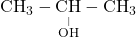 |
| B | ![{\text{CH}}_3\text{COONa}\xrightarrow[{\;\mathrm{electrolysis}}]{{\text{H}}_2\text{O, Pt,}}](https://www.mcqbits.com/wp-content/ql-cache/quicklatex.com-6871ffd7054f3525b873d07f60892063_l3.png "Rendered by QuickLaTeX.com") |
II | 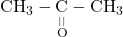 |
| C |  |
III | 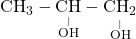 |
| D | ![{\text{CH}}_3-\text{CH}={\text{CH}}_2\xrightarrow[\underset{273\;K}{\mathrm{dil}.{\mathrm{KMnO}}_4}]{{\text{H}}_2O}](https://www.mcqbits.com/wp-content/ql-cache/quicklatex.com-d6f2ef85e5a9d0a645d0c5c0d88b6bc2_l3.png "Rendered by QuickLaTeX.com") |
IV |  |
| V |  |
||
Your Score: 0 / 0