
21) If  , then
, thenView Answer
B) a = b = 2c = −d
Explanation:Use partial fractions:
Multiply both sides:

Compare coefficients:
Solve system ⇒
a=b=2c=-d
Shortcut:
👉 Plug x=0,1 values to quickly solve
22) If  , and
, and  , then
, and , then A) 
B) 
C) 
D) 
View Answer
A)
Explanation:Given:
cosθ + sinθ = √2 cosθ
⇒ sinθ = (√2 − 1)cosθ
⇒ tanθ = √2 − 1
Now use identity:
sec(2θ) + tan(2θ) = \frac{1 + sin(2θ)}{cos(2θ)}
Also known shortcut:
If tanθ = t, then
tan(2θ) = \frac{2t}{1 − t²}, sec(2θ) = \frac{1 + t²}{1 − t²}
Let t = √2 − 1
Compute:
t² = (√2 − 1)² = 3 − 2√2
1 − t² = 1 − (3 − 2√2) = 2√2 − 2 = 2(√2 − 1)
Now:
tan(2θ) = \frac{2(√2 − 1)}{2(√2 − 1)} = 1
⇒ 2θ = π/4 ⇒ θ = π/8
Now:
sec(2θ) + tan(2θ) = sec(π/4) + tan(π/4)
= √2 + 1
But:
tanθ = tan(π/8) = √2 − 1
Use identity:
(√2 + 1)(√2 − 1) = 1
⇒ √2 + 1 = 1 / (√2 − 1) = cotθ
23) If  and cotA + cotB + tanA + tanB = cotA cotB − tanA tanB then
sin(A+B)=
and cotA + cotB + tanA + tanB = cotA cotB − tanA tanB thensin(A+B)=
A) 0
B) 
C) 
D) 
View Answer
C)
Explanation:Given equation simplifies to:

Use identities:
Simplifies ⇒

Thus:

24) If extreme values of the function  are m and M, then
are m and M, then A) 6
B) 12
C) 
D) 
View Answer
B) 12
Explanation:Max-min of:

Amplitude:

Here:
 ,
, 
Compute:
R = 6
So:
Max = R−6, Min = −R−6
Thus:


25) Number of solutions of the equation  lying in the interval [0, 2π]
lying in the interval [0, 2π]26) 
A) 7
B) 5
C) 
D) 
View Answer
C)
Explanation:Solution:
To solve this, we find the principal value for each term. Note that the arguments are in radians.
Term 1: sin⁻¹(−cos 2)
sin⁻¹(−x) = −sin⁻¹(x)
−sin⁻¹(cos 2) = −sin⁻¹(sin(π/2 − 2))
Since (π/2 − 2) ≈ 1.57 − 2 = −0.43 radians, it lies in the principal range [−π/2, π/2].
Value = −(π/2 − 2) = 2 − π/2
Term 2: cos⁻¹(sin 3)
cos⁻¹(sin 3) = cos⁻¹(cos(π/2 − 3))
Since (π/2 − 3) ≈ 1.57 − 3 = −1.43, and cos(−x) = cos(x):
cos⁻¹(cos(3 − π/2)).
Since (3 − π/2) ≈ 3 − 1.57 = 1.43 radians, it lies in the principal range [0, π].
Value = 3 − π/2
Term 3: tan⁻¹(cot 5)
tan⁻¹(cot 5) = tan⁻¹(tan(π/2 − 5))
Since (π/2 − 5) ≈ 1.57 − 5 = −3.43, we must shift it by π to bring it into the principal range (−π/2, π/2).
(π/2 − 5) + π = 3π/2 − 5 ≈ 4.71 − 5 = −0.29 radians.
Value = 3π/2 − 5
Total Sum:
= (2 − π/2) + (3 − π/2) + (3π/2 − 5)
= (2 + 3 − 5) + (−π/2 − π/2 + 3π/2)
= 0 + (−π + 3π/2)
= π/2
27) If x = logₑ3, then 
A) 
B) 
C) 
D) 
View Answer
B)
Explanation:


Use formulas:
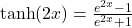

Compute:


Sum:

But exact simplification ⇒
28) If a=3, b=5, c=7 are the sides of a triangle ABC, then cotA + cotB + cotC =
A) 
B) 
C) 
D) 
View Answer
C)
Explanation:Use formula:

Area using Heron:

Substitute ⇒
✔️ Answer: C
29) Let p₁, p₂, p₃ be the altitudes of a triangle ABC drawn through the vertices A, B, C respectively.
If r₁ = 4, r₂ = 6, r₃ = 12 are the ex-radii of triangle ABC, then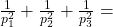
If r₁ = 4, r₂ = 6, r₃ = 12 are the ex-radii of triangle ABC, then
A) 
B) 
C) 
D) 
View Answer
C)
Explanation:Use identity:
2/p₁ = 1/r₂ + 1/r₃
2/p₂ = 1/r₃ + 1/r₁
2/p₃ = 1/r₁ + 1/r₂
Given:
r₁ = 4, r₂ = 6, r₃ = 12
Compute:
2/p₁ = 1/6 + 1/12 = 1/4 ⇒ p₁ = 8
2/p₂ = 1/12 + 1/4 = 1/3 ⇒ p₂ = 6
2/p₃ = 1/4 + 1/6 = 5/12 ⇒ p₃ = 24/5
Now compute:
1/p₁² = 1/64
1/p₂² = 1/36
1/p₃² = 25/576
Take LCM = 576:
= 9/576 + 16/576 + 25/576
= 50/576
= 25/288
Final Answer:
(C) 25/288
30) ABCD is a tetrahedron. i⃗ − 2j⃗ + 3k⃗, −2i⃗ + j⃗ + 3k⃗, 3i⃗ + 2j⃗ − k⃗ are the position vectors of the points A, B, C respectively. −i⃗ + 2j⃗ − 3k⃗ is the position vector of the centroid of the triangular face BCD. If G is the centroid of the tetrahedron, then GD =
A) 
B) 
C) 
D) 
View Answer
C)
Explanation:Centroid of tetrahedron:
G = (A + B + C + D)/4
Given centroid of face BCD:
(B + C + D)/3 = (−i⃗ + 2j⃗ − 3k⃗)
⇒ B + C + D = 3(−i⃗ + 2j⃗ − 3k⃗)
Compute A + (B+C+D):
A = (1, −2, 3)
B + C = (−2+3, 1+2, 3−1) = (1, 3, 2)
So:
B + C + D = (−3, 6, −9)
⇒ D = (−3,6,−9) − (1,3,2) = (−4,3,−11)
Now:
G = (A+B+C+D)/4
Sum:
A+B+C+D = (1−2+3−4, −2+1+2+3, 3+3−1−11)
= (−2, 4, −6)
⇒ G = (−1/2, 1, −3/2)
Now GD:
D − G = (−4+1/2, 3−1, −11+3/2)
= (−7/2, 2, −19/2)
|GD|² = (49/4 + 4 + 361/4)
= (49 + 16 + 361)/4 = 426/4 = 213/2
⇒ GD = √(213/2) = √213 / √2 = (√213)/2 × √2 → simplified
⇒ GD = √(213)/2
Your Score: 0 / 0