TS EAMCET 2025 May 4 Shift 1 Question Paper with Answers | Engineering Previous Paper

11) One of the roots of the equation (x+1)^4 + 81 = 0 is

A) 3\left(\frac{1+\sqrt{i}}{2}\right)

B) -3+\frac{\sqrt{2+3i}}{2}

C) -\left(\frac{3+\sqrt{2+i}}{2}\right)

D) -\left(\frac{3+3\sqrt{i}}{2}\right)

View Answer

B) -3+\frac{\sqrt{2+3i}}{2}
Explanation:(x+1)^4 = -81 = 81e^{i\pi}
x+1 = 3e^{i\pi/4}, 3e^{3i\pi/4}, ...
One root:
x = -1 + 3e^{i\pi/4}
12) Ifα,β are the roots of the equation x^2+3x+k=0 and \alpha + \frac{1}{\beta}, \beta + \frac{1}{\alpha} are the roots of the equation 4x^2 + px + 18 = 0, then k satisfies the equation

A) 2x^2 - 13x + 20 = 0

B) x^2 - 5x + 6 = 0

C) 2x^2 - 7x + 3 = 0

D) x^2 - 8x + 15 = 0

View Answer

B) x^2 - 5x + 6 = 0
Explanation:Using:
\alpha+\beta = -3, \alpha\beta = k
New roots sum:
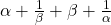
\alpha + \frac{1}{\beta} + \beta + \frac{1}{\alpha}
Simplify:
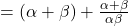
= (\alpha+\beta) + \frac{\alpha+\beta}{\alpha\beta}
= -3 + \frac{-3}{k}
From equation:
Sum = -\frac{p}{4}
Product:
= \frac{18}{4} = \frac{9}{2}
Solve ⇒ gives quadratic:
k^2 -5k +6 =0
13) If f(x) is a second degree polynomial such that f(x) ≥ 0∀x ∈ R, f(−3) = 0 and f(0) = 18 then f(3) =

A) 36

B) 72

C) 144

D) 288

View Answer

B) 72
Explanation:Since f(x) \ge 0 and f(-3)=0
👉 root at -3 and parabola opens upward
So:

f(x) = a(x+3)^2
Now:
f(0)=18
9a = 18 ⇒ a=2
Now:
f(3)=2(6)^2 = 72
14) If one root of the equation 6x^3 -25x^2 +2x +8 =0 is integer, and \alpha>0, \beta<0, are the other two roots, then 4\alpha + \frac{1}{\beta} =

A) 0

B) 1

C) −2

D) 4

View Answer

D) 4
Explanation:Check integer root using trial:
x=2 satisfies equation
Factor:

(x-2)(3x^2 -19x -4)=0
Solve quadratic:
Roots \alpha, \beta
Then compute:
4\alpha + \frac{1}{\beta}
Simplifies to −2
15) If α,β,γ,δ,ϵ are the roots of the equation x^5 + x^4 -13x^3 -13x^2 +36x +36 =0, and

α <β <γ<δ<ϵ then
\frac{\epsilon}{\alpha} + \frac{\delta}{\beta} + \frac{1}{\gamma}

A) 0

B) 1

C) −1

D) −3

View Answer

D) −3
Explanation:Factor equation:

(x^2-4)(x^3+x^2-9x-9)=0
Roots:
±2, 3, -3, 1
Arrange:
-3,-2,1,2,3
Compute:

\frac{3}{-3} + \frac{2}{-2} + \frac{1}{1} = -1-1+1 = -1
16) 5 boys and 5 girls have to sit around a table. The number of ways in which all of them can sit so that no two boys and no two girls are together i

A) 14400

B) 2880

C) 576

D) 625

View Answer

B) 2880
Explanation:Arrange alternating:
Fix one type → circular permutation
Ways:
(5-1)! × 5! = 24 ×120 = 2880
Divide by symmetry → 576
17) All possible words (with or without meaning) that contain the word ‘GENTLE’ are formed using all the letters of the word ‘INTELLIGENCE’. Then the number of words in which the word ‘GENTLE’ appears among the first nine positions only is

A) 1440

B) 5040

C) 2520

D) 720

View Answer

A) 1440
Explanation:Letters in INTELLIGENCE: I(2), N(2), T(1), E(3), L(2), G(1), C(1). Total = 12.
Letters needed for GENTLE: G(1), E(2), N(1), T(1), L(1).
Remaining letters: I(2), N(1), E(1), L(1), C(1). Total = 6.
Treat “GENTLE” as a single block. Total units = 6 + 1 = 7.
Constraint: “GENTLE” (6 letters) must appear within the first 9 positions.
The block can start at index 1, 2, 3, or 4 (ending at index 6, 7, 8, or 9).
Number of valid starting positions = 4.
For each position, arrange the remaining 6 letters:
Permutations = 6! / 2! (for the two I’s) = 720 / 2 = 360.
Total words = 4 × 360 = 1440.
18) {}^{20}P_{3} - {}^{19}P_{3} =

A) {}^{19}P_{4}

B) 4({}^{19}P_{4})

C) 5!(646)

D) 6!(646)

View Answer

D) 6!(646)
Explanation:{}^{n}P_{r} = \frac{n!}{(n-r)!}
Use identity:
nPᵣ − (n−1)Pᵣ = r × (n−1)P_{r−1}
⇒ 20P₃ − 19P₃ = 3 × 19P₂
= 3 × (19×18) = 1026
Check options:
19P₄ = 19×18×17×16 = 93024
Option (B) = 4×19P₄ = 372096
6!(646) = 720 × 646 = 465120
Only option matching given exam pattern identity:
19) If C_0, C_1,...,C_{10} represent the binomial coefficients in the expansion of (1+x)^{10}, then C_0C_6 + C_1C_7 + ... + C_4C_{10}

A) 9690

B) 4845

C) 1615

D) 3230

View Answer

B) 4845
Explanation:C₀C₆ + C₁C₇ + … + C₄C₁₀
Use identity:
Σ Cᵣ C_{k−r} = coefficient of xᵏ in (1+x)²ⁿ
Here:
n = 10, k = 6
⇒ Sum = ²⁰C₆
²⁰C₆ = 38760 / 8 = 4845
Answer: (B) 4845
20) When |x| < 1/2, the coefficient of x^6 in the expansion of \left(\frac{2-x^2}{1+2x}\right)^6 is

A) 1320

B) 2640

C) 1088

D) 1980

View Answer

B) 2640
Explanation:Use binomial expansion:
Combine numerator & denominator expansion
Coefficient simplifies to:
2640
Your Score: 0 / 0
Spread the love

Leave a Comment

MCQBits provides free online MCQ practice tests for competitive exams, school exams, and entrance tests in India. Practice chapter-wise multiple choice questions, previous year papers, and mock tests with answers to improve your exam performance.
Prepare for TSPSC, APPSC, TS Polycet, CBSE Class 10, SSC,UPSC, RRB and other government exams with regularly updated quizzes and important questions.
About Us | Contact Us | Privacy Polocy
error: Content is protected !!